
27 Sep 2026 10 min to read
Every Everest Base Camp trekking package includes a line item for “guide” and “porter.” Few trekkers ever ask what that line actually means for the person carrying the load or leading the trail. Most travel blogs cover what the Everest Base Camp trek costs you — almost none explain what it pays the people who make the trek possible.
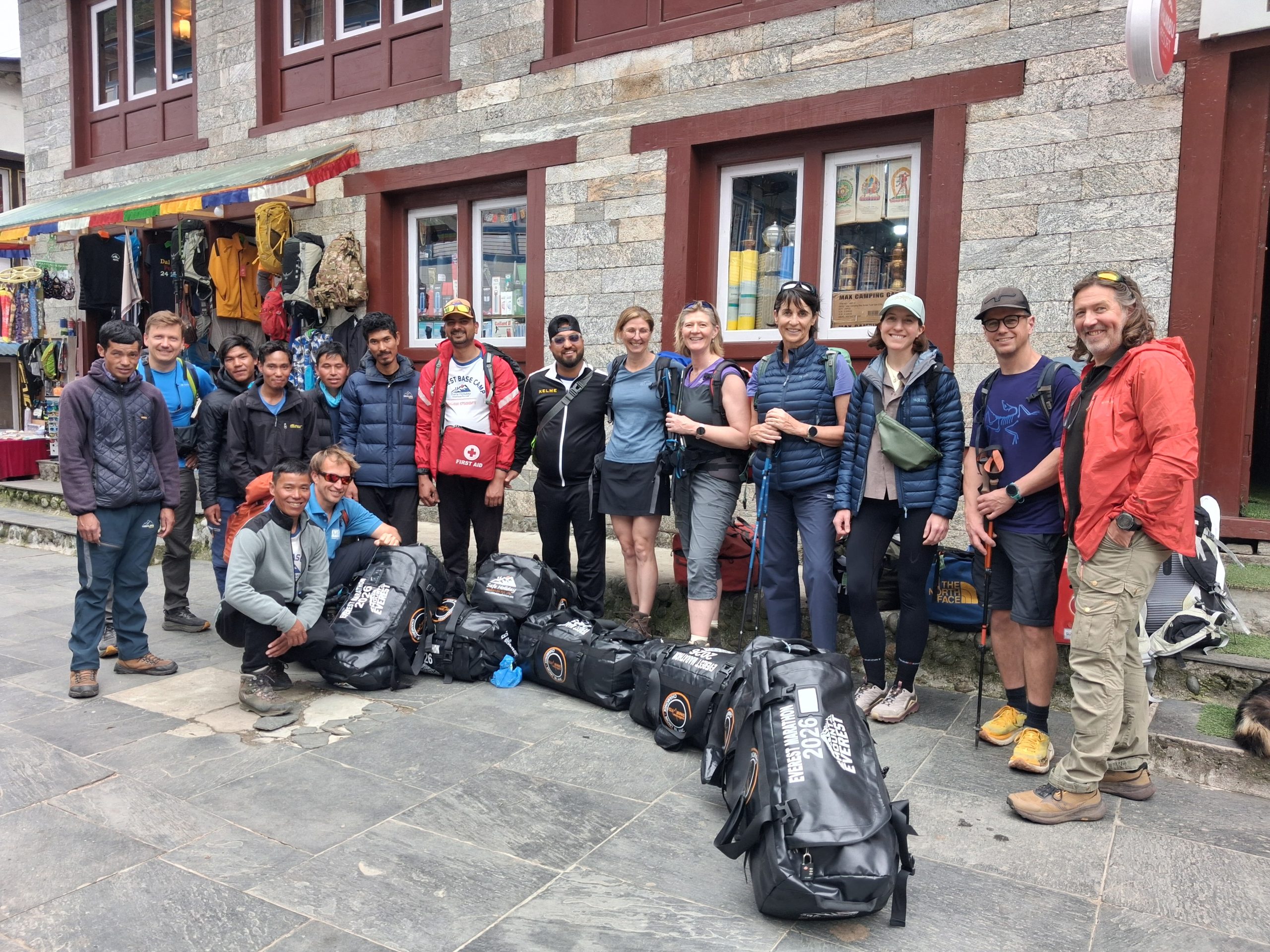
At Safe Holiday Adventure, we work with licensed guides and porters on this route every trekking season. This guide breaks down what they actually earn, why the gap between regulation and reality still exists, and what you can do as a trekker to make your trip fairer for the crew behind it.
Guides and porters aren’t background support staff. They’re the reason thousands of trekkers reach Everest Base Camp safely every year. Understanding how they’re paid – and what risks they take on for that pay – helps you choose an operator that treats its staff responsibly, not just one that offers the cheapest package.
This matters even more now, as the Khumbu region sees rising trekker numbers each season and growing pressure on local guiding and portering resources.
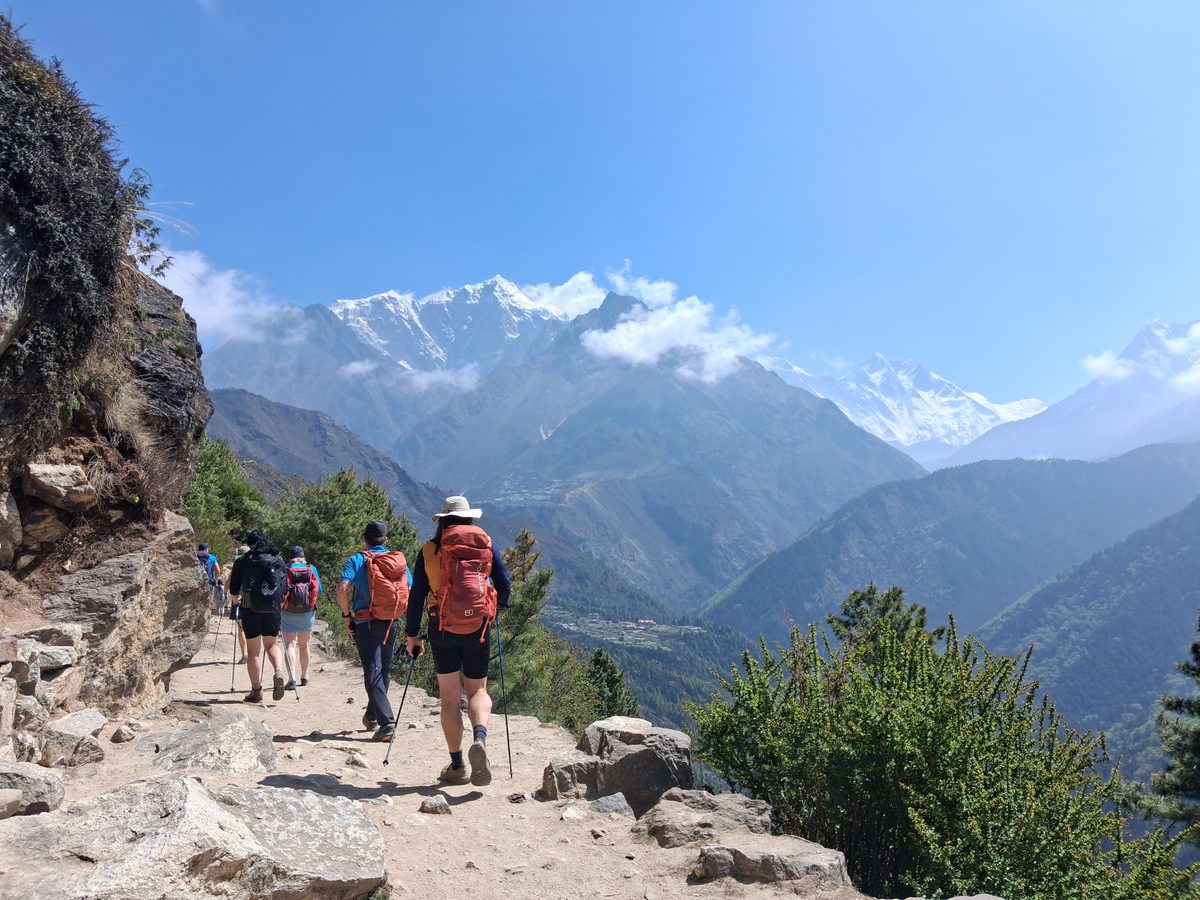
A porter on the Everest Base Camp route typically earns between NPR 2,500 and 4,500 per day, roughly 18 to 25 US dollars. That sounds reasonable until you account for the conditions attached to it.
Above Namche Bazaar, teahouse food and lodging prices rise sharply with altitude. Porters generally cover their own meals and accommodation out of their daily wage, so the real take-home amount shrinks the higher the trail climbs. Many porters also aren’t paid for the day they meet trekkers at Lukla airport or the day they escort them back afterward, even though both are working days in every practical sense.
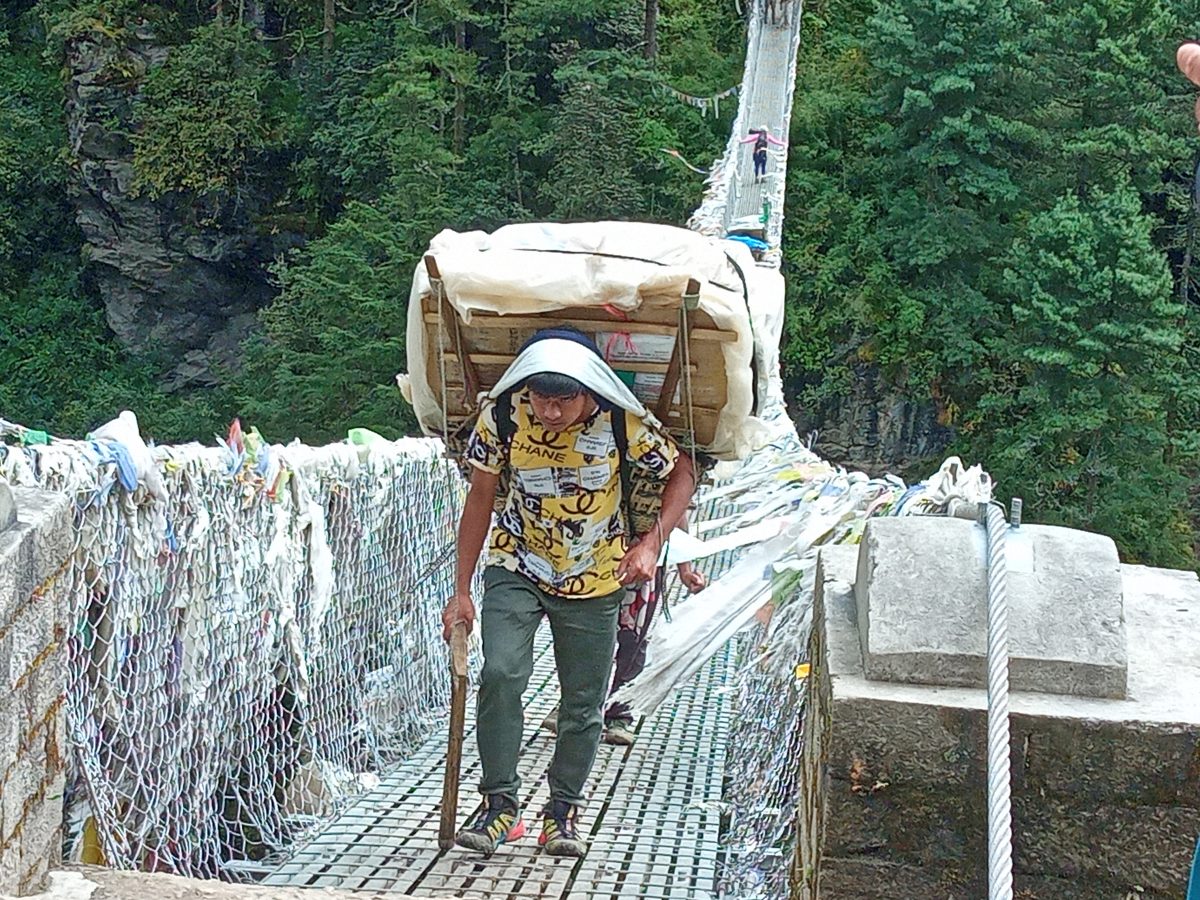
The International Porter Protection Group recommends a maximum carrying load of 30 kilograms for porters working in Nepal. On the ground, enforcement is inconsistent. Loads of 60 to 90 kilograms are not unusual, particularly when porters are carrying supplies for teahouses rather than a single trekker’s duffel bag.
Carrying two or three times the recommended weight at high altitude, often in basic footwear and without proper cold-weather gear, is where the physical cost of this job becomes serious. Frostbite, altitude sickness, and chronic joint and back injuries are ongoing risks that rarely make it into a typical EBC blog post.
Licensed trekking guides earn more than porters, typically 25 to 35 US dollars per day. That difference reflects real professional qualifications: a government-issued trekking guide license, first-aid certification, and language training through Nepal’s tourism training system.
Unlike porters, guides don’t carry client bags. Their responsibilities include route planning, pace management, altitude monitoring, and handling emergencies — decisions that directly affect trekker safety. This is also a licensed profession, not an informal arrangement, which is part of why the pay structure differs from portering.
Most guides working in the Khumbu region come from Sherpa communities, while many porters come from Rai, Tamang, and other communities based at lower altitudes. This distinction matters because it shapes who benefits most from Everest tourism revenue, and who — despite carrying the heaviest physical burden — is often paid the least and protected the least.
Guides are typically required to carry insurance covering medical treatment and helicopter evacuation. Porters, in many cases, are not — even though they face the same altitude, cold, and terrain risks as everyone else on the trail.
A medical emergency that’s a covered inconvenience for a trekker or a guide can become a financial catastrophe for a porter’s family if no insurance is in place. This is one of the clearest, most fixable gaps in how the trekking industry currently operates.
Trekking to Everest Base Camp genuinely supports rural Nepali livelihoods when it’s done responsibly. Guiding and portering income funds households, education, and small businesses throughout the Khumbu region. The goal isn’t to discourage trekking — it’s to trek with better information.
A few direct questions before booking make a real difference to the people who get you to Base Camp and back:
1. How much does a porter earn per day on the Everest Base Camp trek?
A porter typically earns between NPR 2,500 and 4,500 per day, roughly 18 to 25 US dollars, though the exact amount depends on the agency, the season, and whether the porter is hired independently or through a licensed company.
2. How much does a guide earn per day on the Everest Base Camp trek?
Licensed trekking guides typically earn between 25 and 35 US dollars per day, reflecting their government licensing, first-aid training, and added safety responsibilities on the trail.
3. Why do guides earn more than porters?
Guides carry professional licensing requirements, including formal training through Nepal’s tourism education system and first-aid certification. Their role involves route decisions, pace management, and emergency response, whereas porters are hired specifically for carrying loads.
4. Do porters get paid for the days before and after the trek?
Often not. Many porters aren’t compensated for the day they meet trekkers at Lukla airport or the day they escort them back to Kathmandu, even though both involve real working time.
5. Does a porter’s daily wage cover their food and accommodation?
Usually not fully. Porters generally pay for their own meals and lodging out of their daily wage, and since teahouse prices rise sharply with altitude, their actual take-home income shrinks the higher the trek goes.
6. How much can a porter earn over a full 12–14 day trek?
Based on a daily rate of roughly 18 to 25 US dollars, a porter might earn somewhere between 220 and 350 US dollars for a full trek, before subtracting personal food and lodging costs on the trail.
7. How much can a guide earn over a full 12–14 day trek?
At 25 to 35 US dollars per day, a guide’s earnings for a full trek typically fall between 300 and 490 US dollars, not including tips.
8. Do tips make a meaningful difference to porter and guide income?
Yes, significantly. Tips are separate from daily wages and often represent a substantial portion of a porter’s or guide’s total earnings from a single trip, particularly for porters whose base wage is lower.
9. Is porter and guide income the same throughout the year?
No. Earnings tend to be higher during peak trekking seasons (spring and autumn) when demand for guides and porters increases, and lower during the monsoon and winter off-season when fewer trekkers are on the trail.
10. How much weight are porters legally allowed to carry?
The International Porter Protection Group recommends a maximum load of 30 kilograms for porters working in Nepal. In practice, enforcement is inconsistent, and porters are sometimes asked to carry considerably more.
11. Do porters receive insurance coverage?
Not always. Guides are typically required to carry insurance covering medical treatment and helicopter evacuation, but porters are not always covered to the same standard, which leaves them financially exposed in a medical emergency.
12. Are porters and guides paid the same by every trekking agency?
No. Wages vary between agencies, and this is one reason it’s worth asking a trekking company directly about pay rates and insurance before booking, rather than assuming standard treatment across the industry.
13. Which communities typically work as guides versus porters in the Everest region?
Most licensed guides in the Khumbu region come from Sherpa communities, while many porters come from Rai, Tamang, and other communities from lower-altitude districts. This affects how trekking income is distributed across different groups.
14. Can porters become guides over time?
Yes, this is a common career path. Many porters work their way toward guide licensing over several seasons, gaining trail experience before completing the formal training and certification required to guide independently.
15. Do porters get any days off during the trek?
Rarely. Even on trekkers’ rest and acclimatization days, porters are often still working, helping with lodge logistics or preparing for the next stage of the route.
16. Is it better to hire a porter through an agency or independently at the trailhead?
Hiring through a licensed, reputable agency generally provides more consistent pay and insurance coverage than informal arrangements made directly at the trailhead, though it’s worth confirming wage and insurance details either way.
17. How much should trekkers budget for tipping guides and porters?
Tipping amounts vary, but porters are typically tipped a smaller flat amount than guides, given their lower base wage and the physical demands of the job. It’s best to check current recommended tipping ranges with your operator before departure, since amounts shift over time.
18. Do porters carrying loads for teahouses earn the same as porters carrying trekkers’ bags?
Not necessarily. Porters carrying general teahouse supplies (food, fuel, construction materials) are often paid differently, and may carry heavier loads, than porters hired specifically to carry an individual trekker’s personal duffel bag.
19. What happens to a porter’s income if the trek is cut short due to weather or illness?
This depends on the agency’s policy. Some companies guarantee full pay for the contracted trek days regardless of an early return, while others pay only for days actually worked — another good question to ask before booking.
20. How can trekkers make sure their money actually benefits guides and porters fairly?
Ask the operator directly what guides and porters are paid, confirm insurance coverage for both roles, check load limits are respected, and tip separately and generously, since tips often make up a meaningful share of total income for the trekking crew.
A $1,500 to $2,500 Everest Base Camp package looks very different depending on where the money actually goes. A guide earning around $30 a day and a porter earning around $20 a day — both working two weeks with little or no pay before and after the trek — are the people who make your journey to Base Camp physically possible. Asking a few direct questions before you book costs you nothing, and it makes a genuine difference to the people carrying you there, one step at a time.
Understanding Everest Base Camp Trek Permits Cost is one of the first things every Everest Region tr
Continue Reading
Introduction Namche Bazaar is the beating heart of the Khumbu region and the first major stop for ev
Continue Reading
Standing at the foot of the world’s highest mountain is a moment that stays with you forever.
Continue Reading
The Everest Base Camp trek is moderate to hard. There is no climbing, no ropes and no technical skil
Continue Reading
The Gokyo Lakes and Gokyo Ri Trek is one of the most rewarding ways to explore the Everest region wi
Continue Reading
Manaslu Circuit Trek weather is more complicated than simply checking the forecast before leaving Ka
Continue Reading