

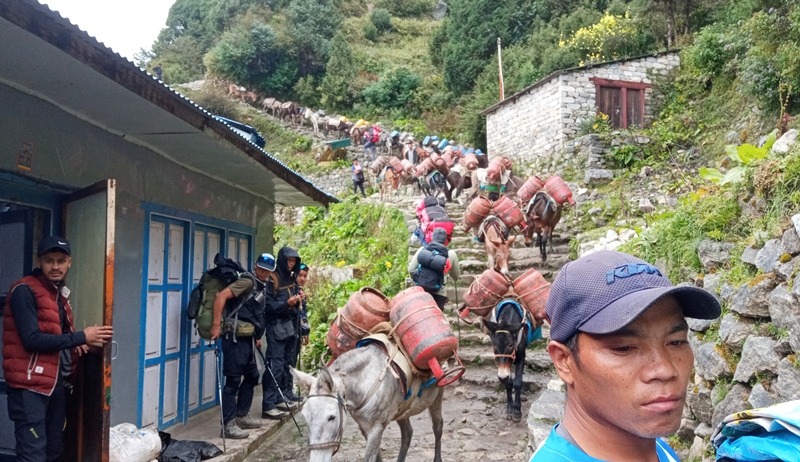
Luxury Everest Base Camp Trek Highlights: Highlights
- Kathmandu Valley & Himalayan Flight Views – Scenic flight over hills, rivers, and snow-capped peaks before landing in Lukla, gateway to Everest.
- Lukla Airport Adventure Landing – One of the world’s most thrilling mountain airports surrounded by dramatic Himalayan landscapes.
- Dudh Koshi River Valley – A beautiful river valley trail with suspension bridges, pine forests, and peaceful mountain villages.
- Namche Bazaar (Sherpa Capital) – A vibrant mountain town with luxury lodges, cafes, bakeries, and panoramic Everest region views.
- Everest View Hotel Panorama – One of the best luxury viewpoints offering clear sights of Mount Everest, Ama Dablam, and surrounding peaks.
- Tengboche Monastery Experience – A spiritual highlight with ancient Buddhist monastery set against a backdrop of towering Himalayas.
- Ama Dablam Close-Up Views – One of the most beautiful mountains in the world, visible prominently during multiple trekking days.
- Dingboche High Alpine Valley – Wide open landscapes with stunning snow peaks and peaceful luxury acclimatization stays.
- Lobuche Glacier Region – Dramatic icy terrain with glacial moraine, prayer flags, and high-altitude Himalayan wilderness.
- Everest Base Camp (5,364m) – The ultimate destination surrounded by Khumbu Icefall, expedition tents, and Everest climbing history.
- Khumbu Icefall Views – Massive moving glacier wall that climbers cross on their way to the summit of Everest.
- Kala Patthar Sunset Viewpoint – The best panoramic view of Mount Everest, especially during sunrise or sunset in golden light.
- Luxury Lodge Mountain Comforts – After each day, relax in premium lodges with warm meals, cozy beds, and mountain hospitality.
- Helicopter Return Over Everest Range – A luxury highlight flight back offering unforgettable aerial views of Everest, glaciers, and valleys.
Luxury Everest Base Camp Trek Introduction: Overview
Luxury Everest Base Camp Trek Experience
Your luxury Everest Base Camp journey begins on arrival at Tribhuvan International Airport in Kathmandu (1,400m). A private transfer takes you to a comfortable premium hotel in the city. The rest of the day is relaxed, allowing you to recover from travel. In the evening, a guided Kathmandu City Tour introduces you to UNESCO heritage sites, including ancient temples, local markets, and cultural squares where Himalayan history meets daily life.
The next morning, the adventure continues with a scenic helicopter flight to Lukla (2,860m). Instead of a standard flight, the helicopter offers smoother travel and incredible aerial views of deep valleys, rivers, and rolling hills. As you approach Lukla, you see the dramatic runway surrounded by Himalayan peaks. From here, the trek begins into the Khumbu region.
The trail follows the Dudh Koshi River, crossing suspension bridges decorated with prayer flags. The river flows from Everest glaciers, guiding your path through pine forests and small Sherpa villages. You pass places like Phakding, where traditional stone houses and warm local hospitality give a peaceful start to the mountains.
The route slowly climbs toward Namche Bazaar (3,440m), the main Sherpa town. The uphill section is steady and can feel challenging, but in luxury style you walk at a comfortable pace with full support. Namche offers beautiful views of Kongde Ri (6,187m) and distant glimpses of Everest (8,848.86m). Here you stay in a premium mountain lodge, enjoy hot meals, and rest properly for altitude adjustment.
A relaxing acclimatization walk around Namche takes you to viewpoints overlooking Ama Dablam (6,812m), Thamserku (6,608m), and the valley below. You also visit Everest View Hotel, one of the highest luxury viewpoints in the world.
The trail continues toward Tengboche (3,867m), home to the famous Tengboche Monastery. The landscape becomes more open, with alpine forests and wide mountain views. You feel the altitude more, but the journey remains smooth with proper pacing and support.
As you move higher, you reach Dingboche (4,410m), a wide valley surrounded by peaks like Lhotse (8,516m) and Island Peak (6,189m). This is another important rest stop where your body adapts in comfort.
Beyond this point, the landscape becomes more rugged and glacial. The trail leads to Lobuche (4,940m), passing memorials of climbers and views of Pumori (7,161m). The air becomes thinner, but luxury support ensures safe progress.
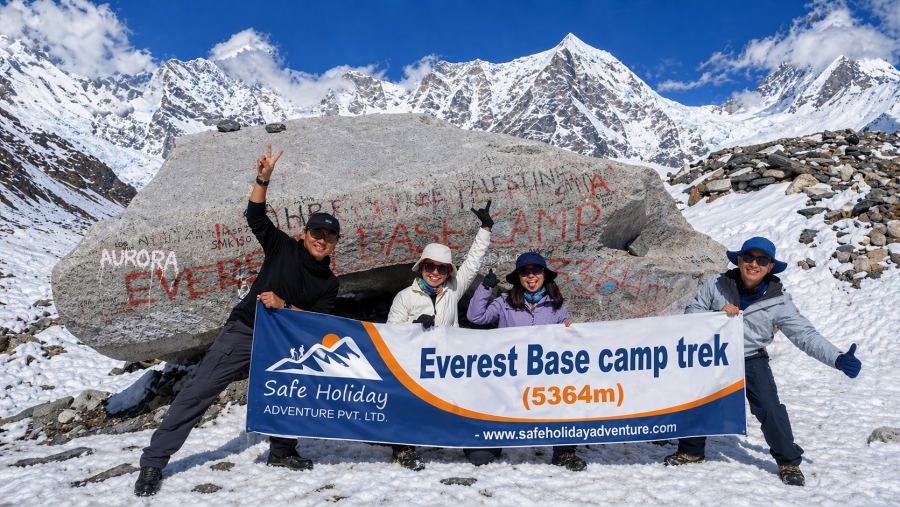
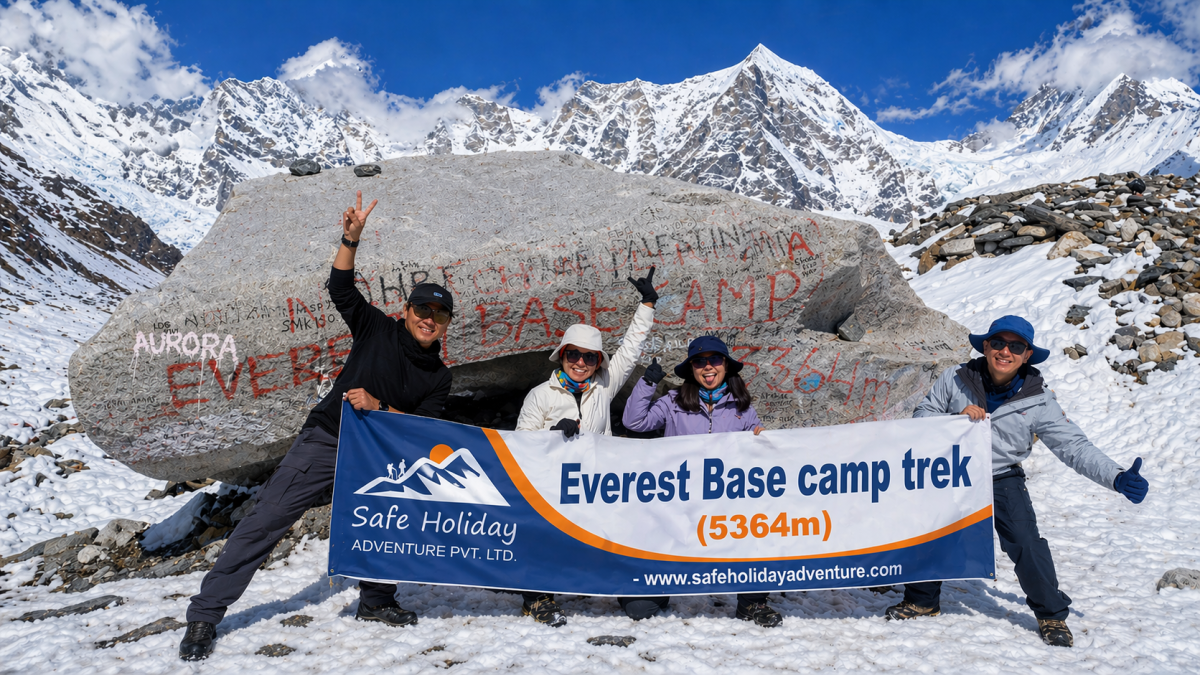
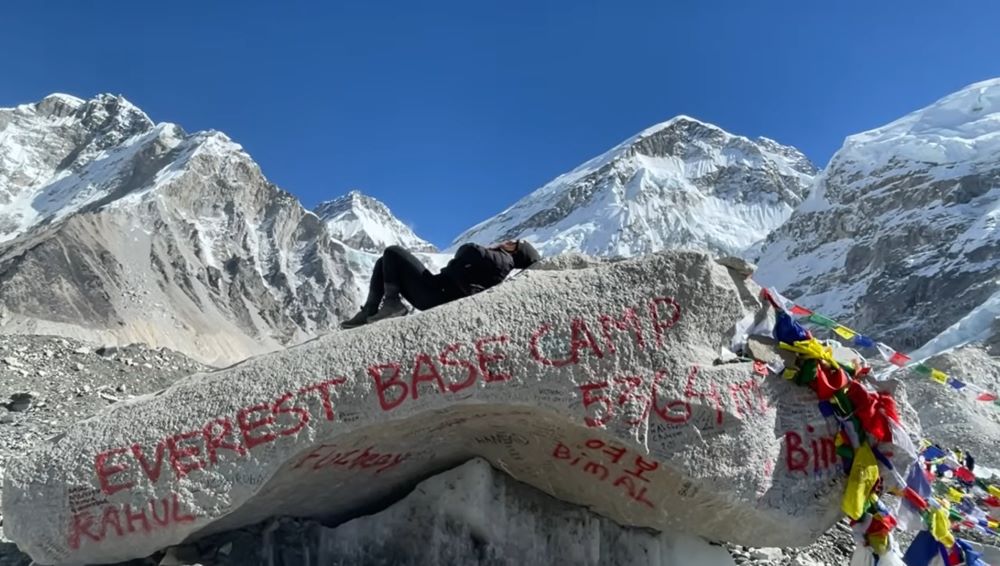
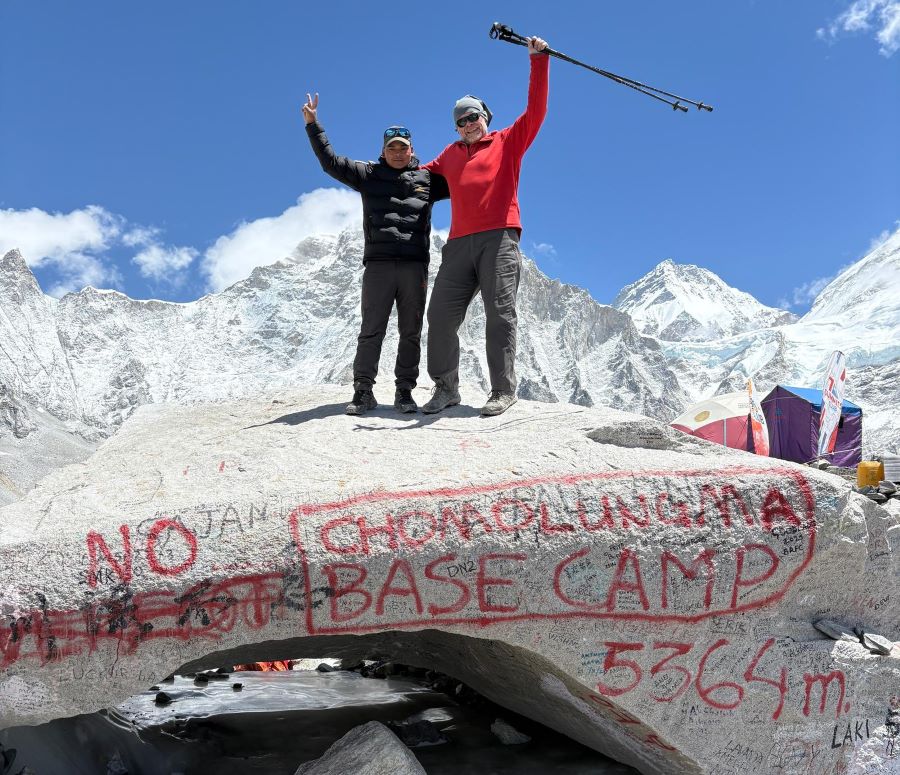
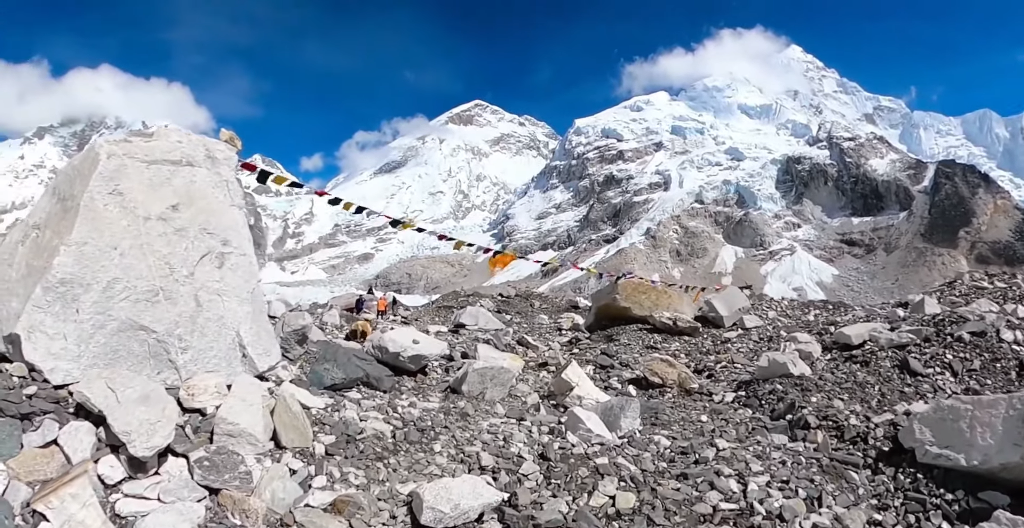
From Lobuche, you reach the legendary Everest Base Camp (5,364m). Here you stand beside the massive Khumbu Glacier and witness the dramatic Khumbu Icefall, where climbers begin their Everest summit journey. Prayer flags, expedition tents, and glacier sounds create an unforgettable moment.
A sunrise hike to Kala Patthar (5,545m) offers the best close view of Mount Everest, glowing in golden light alongside Nuptse (7,861m) and Lhotse. This is the ultimate photographic highlight of the journey.
The descent leads back toward lower valleys, and from the high region, a luxury helicopter flight from Lobuche or nearby heli point returns directly to Kathmandu, offering a final breathtaking aerial view of the entire Everest range.
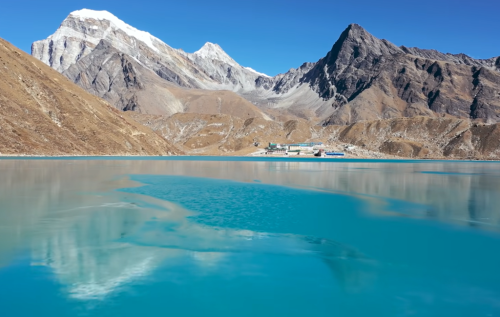
If travelers have extra energy and time, they can extend the journey from Lobuche toward the beautiful Gokyo Valley via Cho La Pass (5,420m), then continue through turquoise lakes and glacial landscapes, eventually returning via Namche. For more route details, see: Gokyo Valley Trek.
This luxury Everest Base Camp trek is not just a hike—it is a carefully designed Himalayan experience combining comfort, culture, and the world’s most iconic mountain scenery.
Is the Luxury Everest Base Camp Trek Suitable for You?
The Luxury Everest Base Camp Trek is suitable for you if you want to experience the Everest Base Camp route with better comfort, support, and safety, but you should still be prepared for a physically demanding high-altitude trek.
It is suitable if you:
- Can walk 5–7 hours a day on uneven mountain trails
- Are reasonably fit and active
- Want better accommodation, food, and guided support compared to standard trekking
- Prefer a safer and more comfortable trekking experience
- Are you a first-time high-altitude trekker or an older traveler who still wants the full EBC journey
It is not suitable if you:
- Cannot handle long daily walking ( 5-8 Hrs) and steep climbs. Sometimes
- Expect full luxury hotel-style comfort throughout the entire trek
- Are not prepared for cold weather and high altitude conditions
- Want a completely easy or relaxed holiday
In short, the Luxury Everest Base Camp Trek is suitable for you if you want a challenging Himalayan adventure with improved comfort and support, but it still requires good fitness and preparation.
How is Our Luxury Everest Base Camp Trek Different from Others?
- Direct Helicopter to Lukla from Kathmandu – No road transfer to Ramechhap, no delays, just a fast and scenic start.
- Best Available Luxury Comfort – 5-star hotel in Kathmandu, premium lodges in lower regions, and clean teahouses higher up.
- Small Exclusive Groups – Limited to 2–12 trekkers for personal attention, flexibility, and better safety.
- Expert High-Altitude Guides – Professionally trained guides with strong Everest region experience and safety focus.
- Advanced Safety Support – Oxygen system, medical kit, and evacuation backup included on all high sections.
- Better Food & Nutrition – Fresh, hygienic meals designed for energy and altitude performance.
- Fully Supported Trekking – Porter service included so you carry only a light daypack.
- Smart Acclimatization Plan – Proper rest days for safer and more comfortable altitude gain.
- Luxury Helicopter Return Option – Fly back from the Everest region and skip long descent trekking.
What to Wear and Pack for the Luxury EBC Trek
Why Book the Luxury EBC Trek with Us ?
- 24/7 Support – Reach us any time at +977-9851231026
- Easy Booking – Contact via WhatsApp, Facebook, Instagram, or Telegram
- Multiple Payment Options – Bank transfer, card, Western Union, and mobile banking
- Private Airport Transfers – Enjoy comfort from your first step in Nepal
- Pre-Trek Briefing – Learn about altitude, safety, and the trekking route
- Medical Preparedness – We carry basic medical kits for your safety
- Local Market Visit – Experience Nepal like a local
- Free Gear Use – We’ll provide sleeping bags and down jackets if needed
- Personalized Service – Ask us anything—we’re happy to help!
Luxury Everest Base Camp Trek 12 Days OutlineOutline Itinerary
Day 1: Arrival in Kathmandu, airport pickup, luxury hotel check-in, welcome briefing and rest day.
Day 2: Kathmandu sightseeing and trek preparation, visiting Swayambhunath Stupa (Monkey Temple), Boudhanath Stupa, and Pashupatinath Temple, plus permits and gear check.
Day 3: Early morning helicopter flight Kathmandu → Tenzing-Hillary Airport (45–60 min), then 3–4 hrs / ~8 km trek to Phakding (2,610m).
Day 4: Trek Phakding → Namche Bazaar, 6–7 hrs / ~10–11 km with steep 1,200m ascent and suspension bridge crossings.
Day 5: Acclimatization in Namche Bazaar with a 3–4 hrs hike to the Everest View Hotel and Khumjung village for altitude adjustment.
Day 6: Trek Namche → Tengboche/Deboche, 5–6 hrs / ~9–10 km with visit to Tengboche Monastery and Himalayan views.
Day 7: Trek Tengboche → Dingboche, 5–6 hrs / ~11–12 km through rhododendron forests and alpine valleys.
Day 8: Acclimatization in Dingboche with a 3–4 hrs hike to Nangkartshang Peak for Everest, Lhotse, and Ama Dablam views.
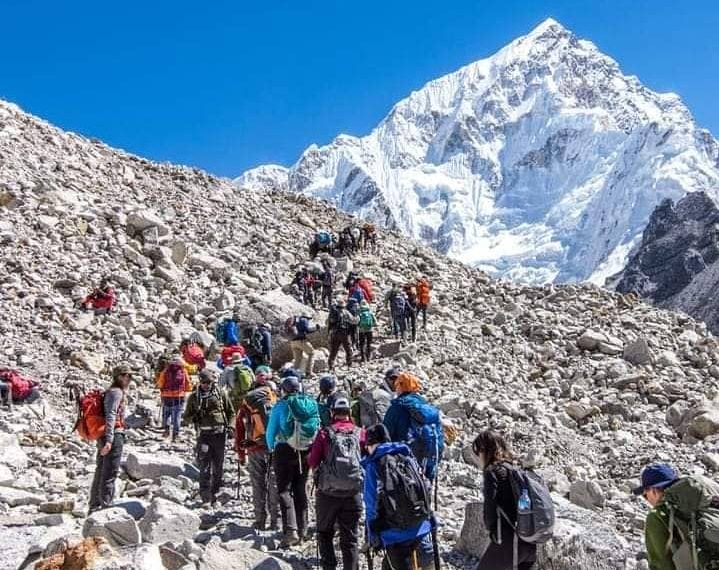
Day 9: Trek Dingboche → Lobuche, 5–6 hrs / ~8–9 km through glacial moraine and high-altitude terrain above 4,900m.
Day 10: Trek Lobuche → Gorak Shep (2–3 hrs), then hike to Everest Base Camp (3–4 hrs round trip), return to Gorak Shep for overnight.
Day 11: Early morning hike Gorak Shep → Kala Patthar (2–3 hrs ascent for sunrise view of Everest), descend to Lobuche, then helicopter flight back to Kathmandu (2–3 hrs total flight time).
Day 12: Leisure morning in Kathmandu for rest, spa, or shopping, followed by airport transfer for final international departure.
Whats Included?
Transportation & Airport Services
- Airport pickup and drop-off according to your international flight schedule
- All domestic airport transfers included
- Private ground transportation in Kathmandu as per itinerary
Luxury Accommodation in Kathmandu & the Everest Region
- 3 nights at Hotel Barahi Kathmandu (4-star luxury hotel) on twin/double sharing with daily breakfast
- 4 nights at premium Mountain Lodges of Nepal (Phakding, Namche Bazaar, Deboche) in comfortable twin-sharing rooms
- 2 nights in standard teahouse lodges with attached bathroom (Dingboche)
- 2 nights in high-altitude teahouse lodges (Lobuche & Gorak Shep) on twin sharing
All Meals & Safe Drinking Water on Trek
- Full board meals (Breakfast, Lunch, Dinner) during the entire trekking journey
- Tea and coffee included with meals
- Safe hot boiled drinking water provided throughout the trek
- Daily breakfast in Kathmandu
- Special farewell celebratory dinner in Kathmandu after trek completion
Everest Region Permits & Entry Fees
- Sagarmatha National Park entry permit
- Khumbu Pasang Lhamu Rural Municipality Entrance Permit
Helicopter Transfers – Luxury & Time Saving
- Sharing a Helicopter flight from Kathmandu to Lukla
- Scenic Sharing Helicopter return from Lobuche to Kathmandu
Professional Trekking Guides & Support Team
- Experienced English-speaking licensed lead guide
- 1 assistant guide for every 5 trekkers for personalized attention
- 1 porter for every 2 trekkers (maximum 10 kg luggage per person)
Safety, Emergency & High-Altitude Support
- Full medical first aid kit with altitude-related medication
- Staff insurance coverage for the full trekking team
Trekking Gear & Equipment Provided
- 85L waterproof duffel bag for trekking use
- High-quality sleeping bag included
- Warm down jacket provided for high-altitude conditions
Additional Services & Support
- Official Everest Base Camp trek completion certificate
- Pre-arrival travel briefing and assistance
- Emergency rescue coordination support if required
International Travel & Visa
- International airfare to and from Nepal
- Nepal tourist visa fee (USD 30 for 15 days)
Personal Expenses
- Personal travel insurance (mandatory for high-altitude trekking)
- Meals in Kathmandu (except breakfast and farewell dinner)
- Extra hotel nights in Kathmandu or during trek due to early arrival, delays, or early descent
- Personal expenses such as drinks, snacks, WiFi, laundry, Mineral water, and shopping
- Tips and gratuities for Guides and Porters
Dates and Availability Departures
All our published dates are guaranteed departures. We also provide customized departures tailored to your travel plans.
May 2026
September 2026
October 2026
November 2026
Travellers Reviews

Alexjendar
Greece | 2025-9-2
Excellent Family Trek Experience with Safe Holiday Adventure
My name is Alexjendar from Greece, and I recently completed the Luxury Everest Base Camp (EBC) Trek with Safe Holiday Adventure. Our group consisted of five people, a family group, and the entire experience exceeded our expectations in every way.
From the very beginning, the team at Safe Holiday Adventure demonstrated excellent organization, professionalism, and genuine care for our comfort and safety. Every detail of the trek was well planned, allowing us to fully enjoy the breathtaking Himalayan scenery without stress.
Our guide, Santosh, was outstanding. He was highly knowledgeable, patient, and always attentive to the needs of our group. His experience, clear communication, and friendly personality made the trek both safe and enjoyable. He ensured proper acclimatization, explained local culture and landscapes, and motivated us throughout the journey.
Our porter, Dharma, also did a wonderful job. He was hardworking, respectful, and always supportive, contributing greatly to the smooth flow of the trek. His dedication and positive attitude were truly appreciated by our entire family.
The luxury services, accommodations, and overall support provided by Safe Holiday Adventure made this trek a memorable lifetime experience for us. We felt safe, well cared for, and welcomed like family throughout the journey.
I highly recommend Safe Holiday Adventure to anyone looking for a reliable, professional, and high-quality trekking company in Nepal. Thank you to the entire team for making our family adventure to Everest Base Camp truly unforgettable.


Genaral Trip InfoInfos
Everest Base Camp trek flight information from Kathmandu to Ramechhap and Lukla
To reach Lukla, you first drive from Kathmandu to Ramechhap (Manthali Airport), which takes about 4 to 5 hours by private vehicle. From there, you take a short 20-minute mountain flight to Lukla. This is the most common way during the busy trekking seasons (spring and autumn) as flights from Kathmandu are limited due to air traffic and weather.
Lukla flight baggage weight limit and extra charges
The total baggage allowance for Lukla flights is 15 kg per person (10 kg checked + 5 kg hand carry). If you carry more, you’ll be charged USD 1–2 per extra kg. It’s best to pack light and leave any unnecessary items in a hotel in Kathmandu.
Luxury lodge room standard during the trek
On a luxury trek, you will stay in premium lodges with private twin-sharing rooms, thick blankets, soft pillows, and attached bathrooms (up to Pangboche). Lodges like Yeti Mountain Home or Everest Summit Lodge offer excellent comfort, clean rooms, and hot showers. Above Dingboche, rooms are still cozy but shared bathrooms are more common.
What happens if you get sick at night
Your guide is trained in altitude sickness management and carries basic first aid. If symptoms become serious (like AMS), we can provide oxygen, call in a helicopter, or help you descend immediately. You’re in safe hands, and we always prioritize your health.
Electricity availability on the trail
Most tea houses and luxury lodges provide electricity through solar panels or local hydro power. You can charge phones, cameras, and batteries, but charging may cost extra at higher altitudes. In luxury packages, charging is often included in the room.
Plug types used in the Everest region
Most lodges use Type C (European round pin) or Type D (Indian round pin) outlets. Bring a universal adapter to stay prepared for all plug types.
Food options in luxury Everest lodges
Luxury lodges offer a variety of clean, fresh meals such as Dal Bhat (rice, lentil soup, vegetables), pasta, fried rice, soups, pizza, toast, and more. You’ll also find snacks, tea, coffee, and even bakery items in some areas like Namche and Dingboche.
Recommended food during the trek
Stick to high-energy, easy-to-digest foods like boiled potatoes, noodles, vegetable soup, porridge, eggs, and garlic soup (helps with altitude). Avoid red meat and alcohol at higher altitudes as they can slow digestion and worsen altitude sickness.
Porter weight limit in the Everest region
One porter can carry up to 20–25 kg, usually for two trekkers. This includes your main duffel bags. Please carry only necessary items and keep valuables in your daypack. Treat porters respectfully—they are the heart of your trek.
Standard vs Luxury Everest Base Camp Trek
A standard trek includes basic tea houses, shared toilets, and limited meal options. In contrast, a luxury trek includes better lodging, attached bathrooms, hot showers, delicious meals, and a helicopter return—ideal for comfort seekers or travelers with limited time.
When to take Diamox for altitude safety
Some trekkers start taking Diamox (acetazolamide) from Namche Bazaar as a preventive measure. Others take it only when symptoms appear. It’s best to follow your doctor’s advice or listen to your experienced guide, who will monitor your health daily.
Tent required or not for Everest Base Camp Trek
No tent is needed. You will sleep in comfortable tea houses or luxury lodges throughout the trek. All accommodations are indoors with real beds, blankets, and food service.
Oxygen availability for sick trekkers
Luxury packages often include access to emergency oxygen. Some lodges above 4,000m also store oxygen cylinders. In emergencies, your guide can arrange a quick helicopter evacuation with our support.
Helicopter seating from Gorakshep to Lukla
Helicopters flying from Gorakshep to Lukla usually carry 3 passengers due to weight limits at high altitude. The views are amazing, and this option saves 3 days of downhill walking.
Best time for the luxury Everest Base Camp Trek
The best seasons are March to May and September to November. During these months, you get clear skies, stable weather, and comfortable temperatures, ideal for helicopter flights and scenic views.
Toilet and shower conditions in lodges
In luxury lodges, you get attached bathrooms with running water and hot showers (gas or solar). Above 4,400m (after Dingboche), showers and toilets are more basic, but still clean and safe.
How safe is the Everest Base Camp Trek
With trained guides, planned acclimatization, and emergency support, your trek is very safe. We monitor your health daily and arrange immediate help if needed.
Drinking water options during the trek
We recommend using boiled water or purified water provided by the lodges. You can also carry chlorine drops or water purification tablets. Luxury treks often include safe drinking water in the package.
Can I buy trekking gear in Kathmandu?
Yes, Thamel (Kathmandu) has many shops selling or renting jackets, poles, sleeping bags, and other trekking gear at good prices.
Mobile network and Wi-Fi on the trail
You’ll get a local SIM card with limited coverage. Namche and some higher villages offer Wi-Fi, but it may be slow. Luxury lodges provide better internet, sometimes included in the package.
Top Recommended Insurance Companies for Everest Base Camp Trek
Here are some globally recommended travel insurance companies that are well-known for covering high-altitude trekking, including the Everest Base Camp Trek in Nepal (up to 6,000 meters). These companies offer emergency medical coverage, trip cancellation, and helicopter evacuation, which are essential for EBC trekking.
1. World Nomads (Australia/Global)
- Covers trekking up to 6,000m, including EBC
- Offers emergency evacuation by helicopter
- Easy online purchase for most countries
- Best for: Adventure travelers, backpackers
2. IMG – International Medical Group (USA/Global)
- Trekking coverage with the “Patriot Adventure” plan
- Includes evacuation and hospital care
- 24/7 emergency assistance
- Best for: US travelers and global citizens
3. Allianz Travel Insurance (Global)
- Reliable with customizable plans
- Optional adventure sports add-on
- Covers medical, cancellation, and delay
- Best for: General tourists and families
👉 www.allianztravelinsurance.com
4. InsureMyTrip (USA/Canada)
- Compare multiple travel insurance companies
- You can filter plans that cover high-altitude trekking
- Good customer service
- Best for: Travelers who want to compare and customize
5. True Traveller (UK/EU Citizens)
- Designed for adventure travel
- Covers trekking up to 6,000m with activity pack
- Includes helicopter rescue and repatriation
- Best for: UK and European trekkers
6. SafetyWing (Global)
- Covers emergency medical, travel delay, and evacuation
- Long-term digital nomad plans are available
- Affordable for younger travelers
- Check altitude limits (some plans need upgrades)
- Best for: Frequent travelers, digital nomads
Important Tips for Buying Trekking Insurance
- Ensure it covers trekking up to 6,000 meters
- Must include helicopter evacuation in Nepal
- Check if pre-existing conditions are covered
- Always carry a printed copy of your policy during the trek
Detailed ItineraryItinerary
Arrival in Kathmandu, airport pickup, luxury hotel check-in, welcome briefing and rest day
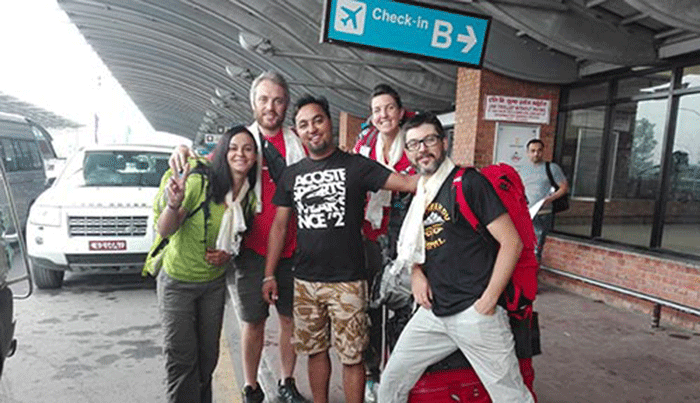
Upon your arrival in Kathmandu (1,400m / 4,593ft), you’ll be greeted by the vibrant atmosphere of Nepal’s capital city. Our representative will welcome you at Tribhuvan International Airport and assist you to your hotel. Take some time to rest and recover from your journey. You can explore the nearby surroundings, savor local cuisine, or relax at the hotel. This day marks the beginning of your adventure, allowing you to immerse yourself in the sights and sounds of Kathmandu.

Accommodation : Hotel in Kathmandu
Exploring Kathmandu and Trek Preparation
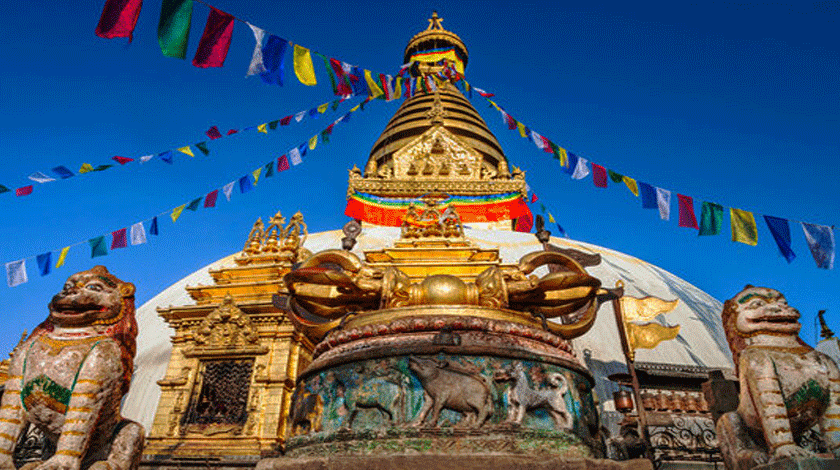
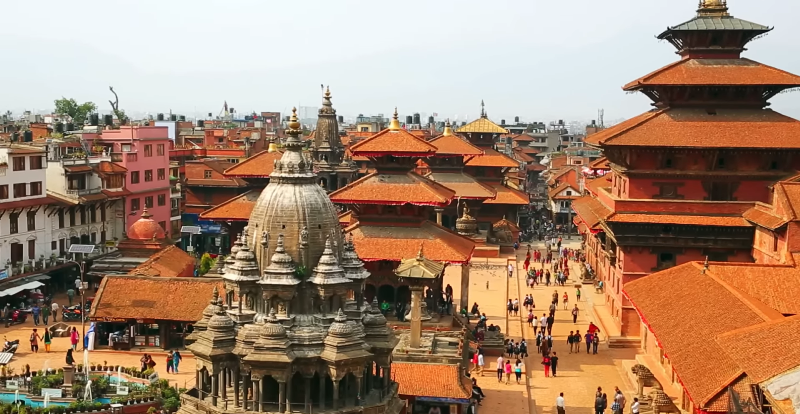
Today you explore the cultural heart of Nepal. You visit Swayambhunath, also known as the Monkey Temple, where prayer flags move with the wind and the whole Kathmandu Valley spreads below. Then you continue to Boudhanath, one of the largest Buddhist stupas in the world, filled with monks, pilgrims, and peaceful energy. Later, you visit Pashupatinath Temple, a sacred Hindu site on the banks of the Bagmati River. Alongside sightseeing, we complete all trekking permits and carefully check your gear. This day connects you to Nepal’s spiritual side and prepares you for the mountains ahead.
Accommodation : Hotel in Kathmandu Meals : Breakfast
Early morning helicopter flight Kathmandu → Tenzing-Hillary Airport then to Phakding
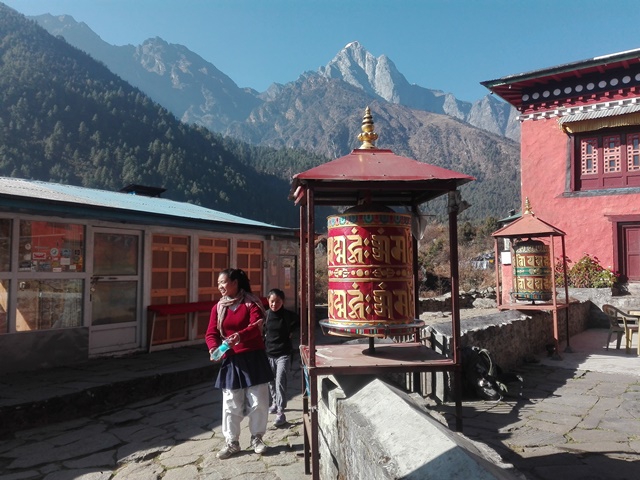
Your mountain journey begins with an unforgettable helicopter flight from Kathmandu. As you rise above the valley, you see rivers, hills, and finally the white peaks of the Himalayas. Landing at Lukla airport, one of the most famous mountain airports in the world, you officially enter the Everest region. From here, you begin your first trek along the Dudh Koshi River to Phakding. The trail is gentle, passing small villages, forests, and suspension bridges. It is a soft introduction to trekking life in the Himalayas.

Accommodation : Mountain Yeti home, Phakding Meals : Breakfast, Lunch & Dinner
Trek Phakding → Namche Bazaar,
A memorable and immersive day unfolds as you leave the river valley and enter the gateway to the high Himalayas, following a trail that links traditional villages, forests, and some of the most iconic mountain views in the world.
The morning trail leads through small settlements like Monjo, where you officially enter Sagarmatha National Park after a permit check at the park office. From here, the path descends briefly to the riverside before continuing toward the lunch stop at Jorsalle, the last settlement before the long ascent begins.
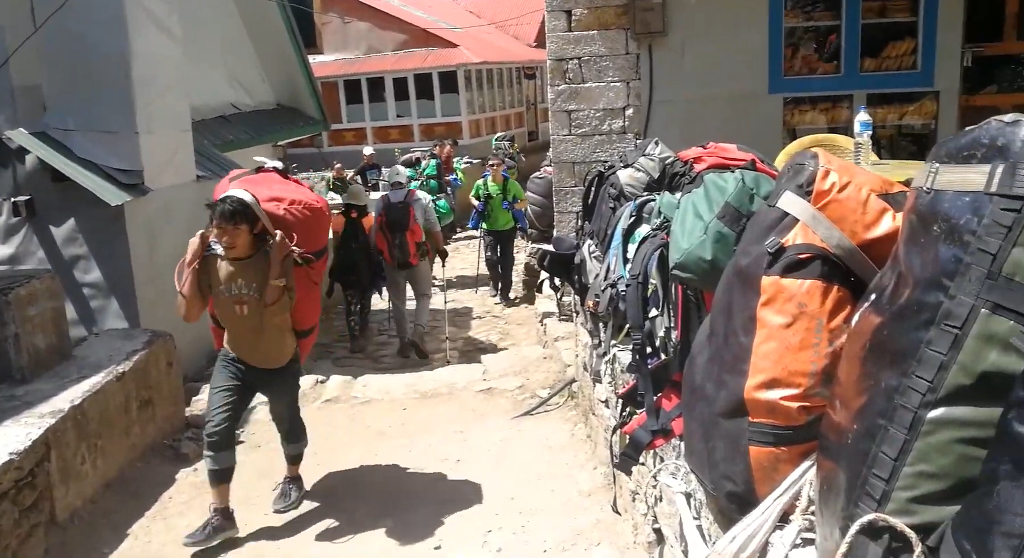
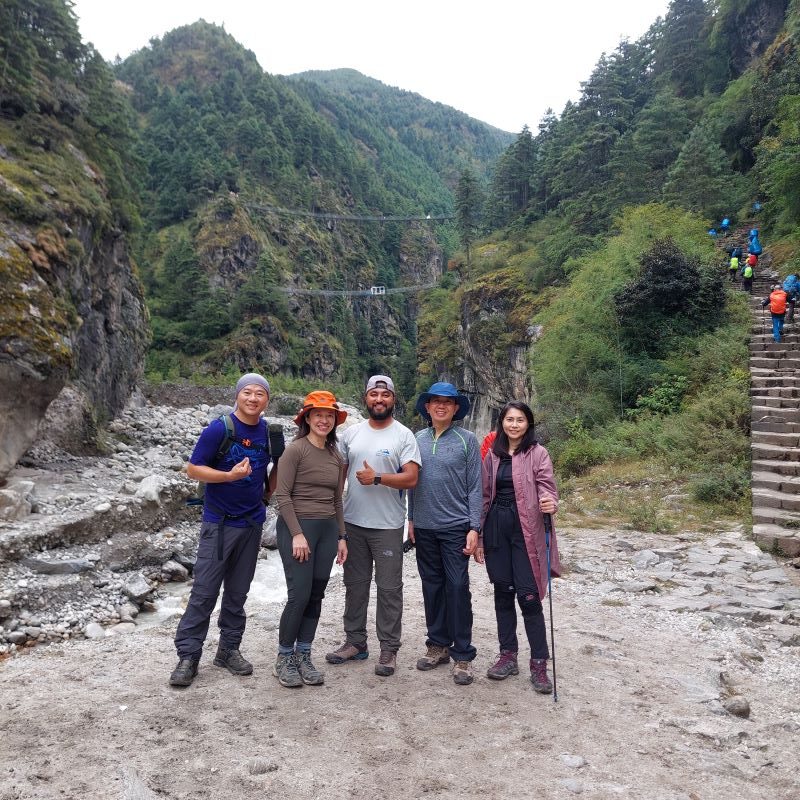
After lunch, the trail becomes more dramatic, with a series of suspension bridges stretching across the roaring Dudh Koshi River, including the famous Hillary Suspension Bridge—the highest and most thrilling of the crossings, often fluttering with prayer flags in the wind.
From here, the real climb begins: a steady 2–3 hour uphill ascent through dense pine and rhododendron forest. The air grows thinner, and the silence deeper, broken only by footsteps and distant river sounds. Along the way, the forest opens up to occasional clearings revealing your first sweeping Himalayan panoramas.
As you gain altitude, the landscape unfolds dramatically. Towering peaks begin to appear one by one: the elegant pyramid of Thamserku, the striking ridgeline of Kongde Ri, the sharp summit of Kusum Kanguru, and the distant sacred peak of Khumbila—guardian mountain of the Sherpa people. On clear days, glimpses of Everest itself begin to appear far beyond the ridges.
Just before reaching your destination, a breathtaking viewpoint at Dudh Koshi Durbin Danda offers your first distant sight of Everest, framed by deep valleys and layered Himalayan ranges—a moment that often stops trekkers in silence.
From here, a final push leads into the hillside town of Namche Bazaar, a vibrant amphitheater-shaped settlement where no vehicles exist—only footsteps, yaks, and mountain life. Set against a backdrop of soaring peaks and winding trails, Namche feels like a world suspended between earth and sky, marking your true arrival in the Everest region.
Accommodation : Tea House Meals : Breakfast, Lunch & Dinner
Acclimatization Day in Namche Bazaar
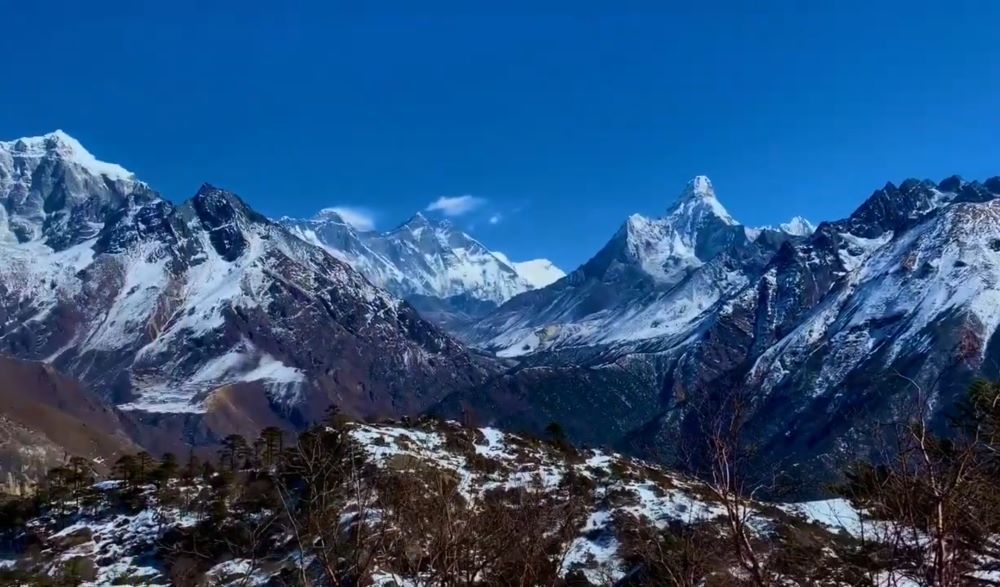
Today is dedicated to acclimatization in Namche Bazaar. Explore the town’s charming alleyways, visit local cafes, and enjoy the mountain atmosphere. A hike to Everest View Hotel rewards you with breathtaking panoramic views of Everest, Lhotse, and Ama Dablam. This day helps your body adjust to higher altitudes, preparing you for the journey ahead.

Accommodation : Hotel Yeti Home, Namche Meals : Breakfast, Lunch & Dinner
Trek from Namche Bazaar to Tengboche
From Panorama Hotel Namche, the trail begins with a short 10-minute descent, stepping down onto a wider, well-defined mountain path that quickly opens into sweeping Himalayan views. After this gentle start, the route settles into a beautiful 1.5-hour traverse toward Kyanjuma and Sanasa, where the landscape becomes more open, and the mountains feel closer with every step.
At Sanasa, a key junction in the Everest region, the trail splits—left leads toward the Gokyo Valley, while the right-hand route continues toward Everest Base Camp, which we follow today. From here, the path gently descends into Lawsasa, a quiet section with a few tea houses, offering a short resting point before the terrain changes again.
The trail then enters a peaceful pine forest, and after around 35 minutes, you reach Phunki Thenga—a popular riverside lunch stop set beside the rushing Imja Khola. This is an ideal place to rest, enjoy a warm meal, and recharge before the afternoon climb.
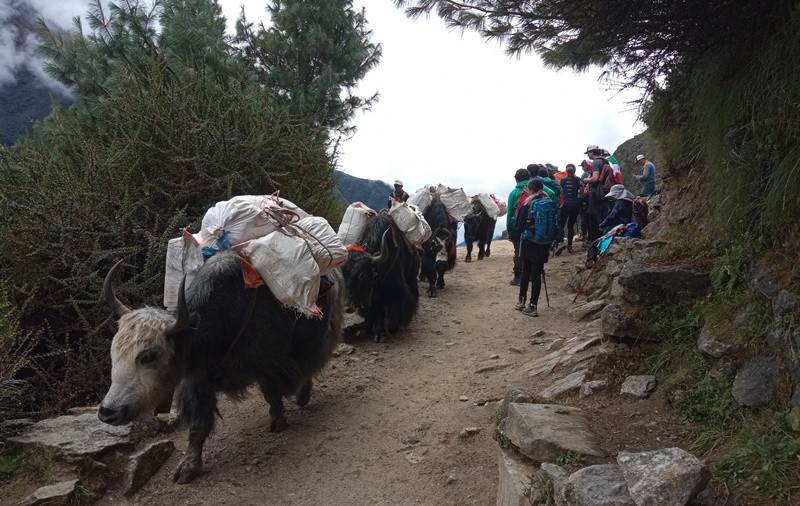
After lunch, the real ascent begins. A steady uphill trail leads through dense alpine forest, gradually gaining altitude over the next 2–3 hours. The climb is continuous but rewarding, with sections opening to dramatic mountain views along the way. As you ascend, you can clearly see peaks such as Thamserku, Kangtega, and Kusum Kanguru rising across the valleys, while the forest slowly thins into higher Himalayan terrain.
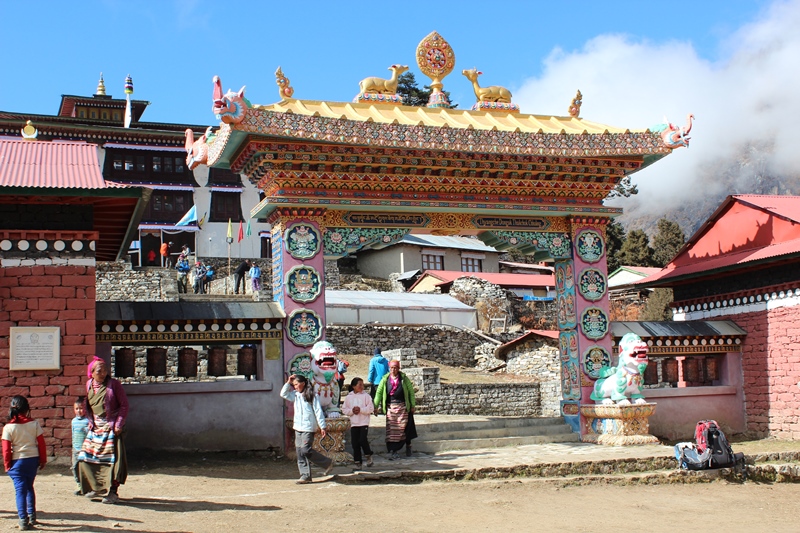
By late afternoon, you arrive at Tengboche Monastery, one of the most sacred and iconic sites in the Everest region. The setting is extraordinary—direct views of Ama Dablam dominate the skyline, while farther peaks such as Mount Everest, Lhotse, Nuptse, and Tawache complete a truly cinematic Himalayan panorama.
In the evening, you can visit the monastery to witness the monks’ chanting ceremony—an atmospheric and deeply spiritual experience that adds meaning and calm to the day’s journey. Afterward, you settle into your accommodation at Himalaya Hotel Tengboche, where warm hospitality, fresh meals, and—on clear nights—a distant view of Everest make for an unforgettable overnight stay high in the mountains.
Accommodation : Tea House Meals : Breakfast, Lunch & Dinner
Trek Tengboche → Dingboche
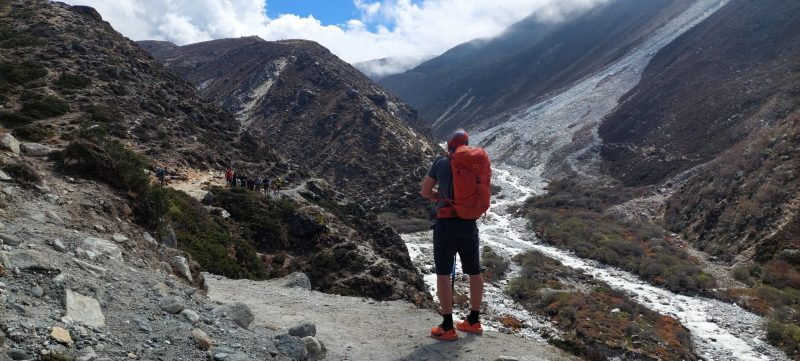
The trek from Tengboche to Dingboche takes about 5–6 hours (11–12 km) and shows a clear change from forest to high mountains. You start in Tengboche, a cool village below a famous monastery. The trail begins in rhododendron and pine forests with soft paths, shaded sections, birds, and views of the valley below.
After a few hours, the forest slowly opens. Trees become fewer and smaller, replaced by bushes and alpine grass. The trail follows the valley side, giving wider views of snow peaks, deep valleys, and glaciers. The air gets thinner and cooler, and small stone-walled fields and yak grazing areas appear along the way.
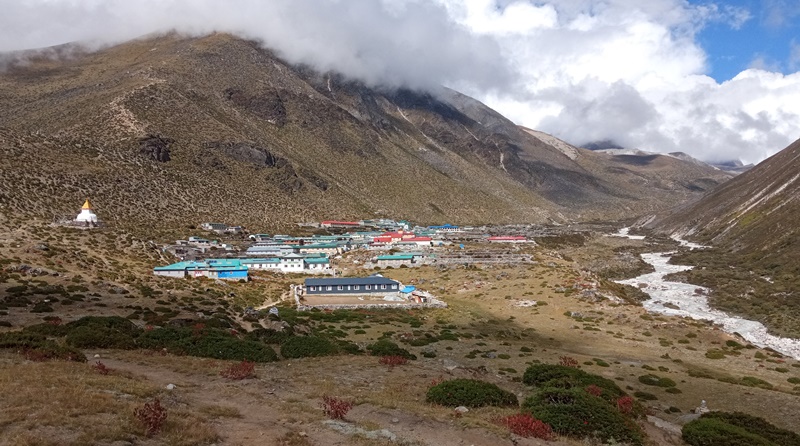
Near Dingboche, the land becomes open and harsh. The village sits in a wide, windy valley surrounded by big mountains. Stone walls protect fields, and simple lodges show life at high altitude. The place feels quiet, remote, and fully in the high Himalayas.
Accommodation : Tea House Meals : Breakfast, Lunch & Dinner
Acclimatization Day in Dingboche
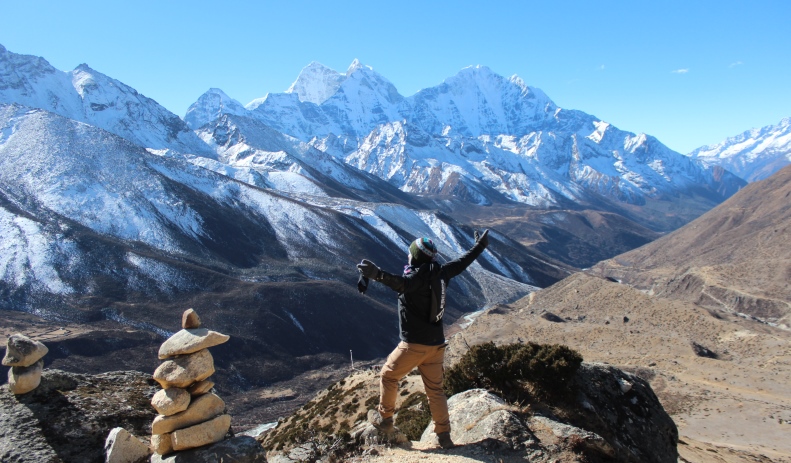
This is another important acclimatization day. You hike up Nangkartshang Peak, a viewpoint that gives stunning panoramic views of Everest, Lhotse, Ama Dablam, and surrounding peaks. The climb is steady but rewarding, and the scenery becomes more dramatic with every step. After enjoying the summit, you return to Dingboche for rest. This day builds your strength and confidence for the higher altitude ahead.

Accommodation : Hotel Dingboche Resort Meals : Breakfast, Lunch & Dinner
Trek from Dingboche to Lobuche
The journey now moves you deeper into the high Himalayas, where the landscape becomes noticeably more rugged, raw, and dramatic.
The trail changes from softer alpine paths into rocky, uneven terrain filled with loose stones, glacial moraine, and dry, windswept valleys shaped by ancient ice. Every step feels more demanding as the altitude increases. The air becomes thinner, making breathing slower and walking more deliberate. Even short climbs feel harder, and you begin to notice how the body must adjust to the reduced oxygen.
Surrounding you are massive, jagged peaks that rise sharply into the sky, creating a powerful sense of scale and isolation. The environment feels more extreme and untouched, with fewer signs of vegetation and a stronger presence of rock, ice, and wind.
Along the route, you pass memorials dedicated to climbers who lost their lives during Everest expeditions. These stone cairns, often decorated with prayer flags, create a quiet and reflective atmosphere, reminding trekkers of the mountain’s seriousness and the risks involved in high-altitude climbing.
As the day continues, you gradually approach Lobuche, a small settlement nestled beneath towering Himalayan giants. The village is simple, with basic stone lodges designed to support trekkers moving toward Everest Base Camp. Despite its modest size, it sits in one of the most dramatic mountain settings in the world.
By the time you arrive in Lobuche, the altitude is strongly felt in every movement and breath. There is a clear awareness that you are now in the high-altitude zone of the Everest region, where the environment is harsh, beautiful, and truly powerful.

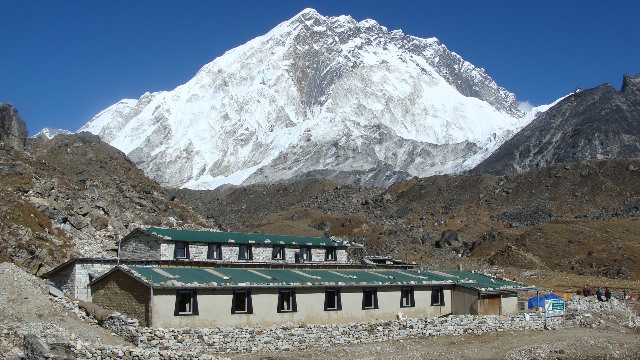
Accommodation : Tae House Meals : Breakfast, Lunch & Dinner
Trek to Everest Base Camp and Gorak Shep
Today is widely considered one of the longest, most physically demanding, and emotionally intense days of the entire Everest Base Camp journey.
You begin early from Lobuche, when the air is still cold and thin. The first section of the trek takes you toward Gorak Shep, the last and highest settlement on the route. Although the distance is relatively short in terms of hours (around 2–3 hours), the walk feels significantly harder than previous days. The altitude is now above 5,000 meters, and every step requires more effort. The path is rough, uneven, and covered with loose rock and moraine debris left behind by ancient glaciers. There are no forests, no soft trails—only a harsh, high-altitude desert of stone and ice.
The air is noticeably thinner here, and even slow walking can feel exhausting. Breathing becomes deeper and more deliberate, and the pace naturally slows. Around you, the landscape is stark yet dramatic, with towering snow-covered peaks and the vast Khumbu Glacier stretching across the valley floor.
Upon reaching Gorak Shep, you arrive at a small, remote settlement that feels almost like the edge of the world. After a short rest and light meal, the second and most important part of the day begins: the hike to Everest Base Camp.
This section takes approximately 3–4 hours round trip, depending on conditions and acclimatization. The trail follows the edge of the Khumbu Glacier, a chaotic landscape of ice blocks, shifting rocks, and frozen terrain. There is no clearly defined path in many places, so navigation requires attention and care. The altitude, combined with fatigue from the morning hike, makes this section especially challenging.
As you gradually approach Everest Base Camp, the environment becomes increasingly surreal. Colorful expedition tents may be visible during climbing seasons, set against a backdrop of towering ice formations and the immense Khumbu Icefall nearby. Standing at Base Camp is not about reaching a summit, but about experiencing a powerful sense of achievement, respect, and emotion. You are at the foot of the world’s highest mountain, in one of the most extreme environments on Earth.
After spending time absorbing the moment, taking photos, and reflecting on the journey so far, you begin the return trek back to Gorak Shep. The descent can feel equally tiring due to accumulated fatigue and altitude effects.
Once back in Gorak Shep, you finally settle in for the night. The lodges are basic but provide essential shelter in this extreme environment. Dinner is simple, and rest becomes the priority. After such a long and demanding day, both physically and mentally, the overnight stay in Gorak Shep feels like a hard-earned pause at the roof of the world.
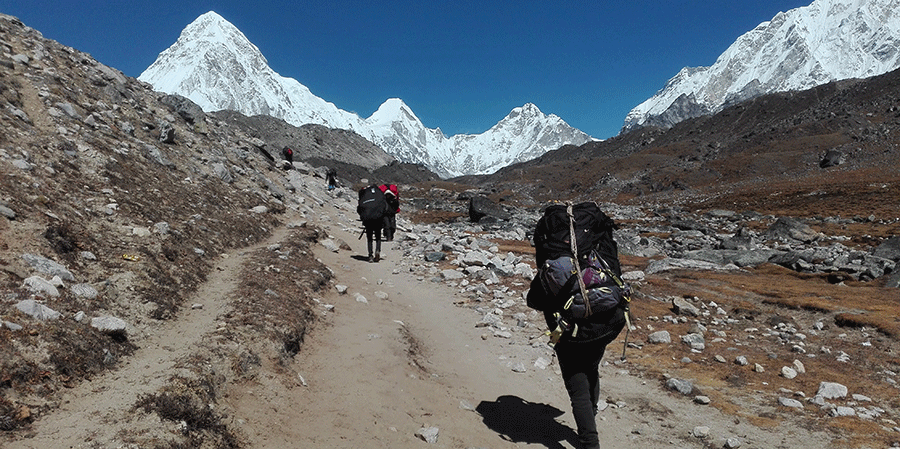
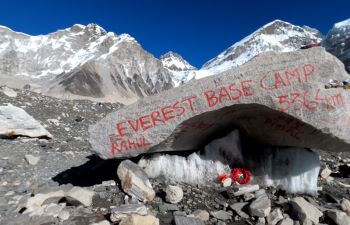
Accommodation : Tea House Meals : Breakfast, Lunch & Dinner
Gorak Shep → Kala Patthar, then descend to Lobuche, followed by a helicopter flight back to Kathmandu.
Before sunrise, you begin your final mountain climb to Kala Patthar. This viewpoint gives the clearest and closest view of Mount Everest. As the sun rises, Everest glows golden, creating one of the most unforgettable sights in the world. After descending to Lobuche, a helicopter arrives to take you back to Kathmandu. You fly over the entire region you walked, seeing valleys, glaciers, and villages from above. It is a beautiful and emotional ending to your mountain journey.

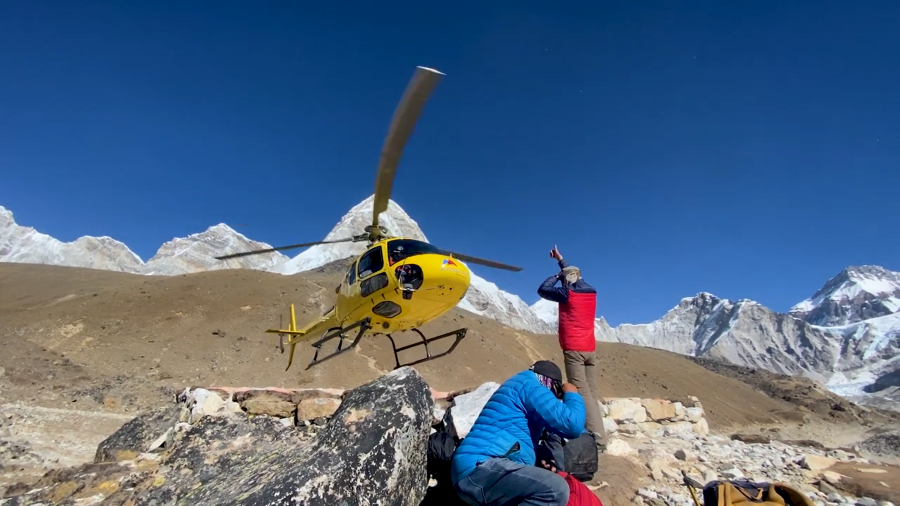
Accommodation : Hotel Meals : Breakfast
Departure day from Nepal- A Final Day in Nepal
Leaving Kathmandu after a successful Everest Base Camp Luxury trek is bittersweet. The journey brought breathtaking Himalayan views, cozy accommodations, and insightful guides. Standing at Everest’s base camp was awe-inspiring. The bonds formed with fellow trekkers and locals added depth. Departing homebound, you carry memories and photos, but a profound sense of accomplishment. This adventure fuels a lifelong love for exploration and nature’s wonders.
Meals : Breakfast
Note:
Dear trekkers, if this itinerary does not suit your fitness or time, we can fully customize it to match your pace. This is a private and flexible trip, so adjustments can be made anytime—just inform us in advance.
Please note that once the trek has started in the mountains, there will be no refund for cancellations or unused services.
Luxury Everest Base Camp Trek FAQs
On a luxury Everest trek, you typically walk 4 to 6 hours per day. The pace is slow and comfortable with frequent breaks for acclimatization and photography.
Luxury EBC treks offer accommodations in upscale lodges and lodges with better amenities than traditional teahouses. These lodges often feature comfortable beds, en-suite bathrooms, heating, and better insulation to keep you warm in colder temperatures.
Yes. You can book a fully private trek with your own guide, porter team, and customized itinerary. This is the most popular option for luxury travelers.
Luxury treks usually have a low guide-to-guest ratio (1 guide per 3–5 trekkers). This ensures personalized care, flexibility, and better safety management.
In a luxury EBC trek, you can expect services such as private Guides, Porters, personalized itineraries, and a higher level of attention to your comfort and safety. The trekking companies often provide extra amenities, hot showers, spa services, a star Hotel in Kathmandu, food in Kathmandu, a Kathmandu City Tour, and fine dining options.
Luxury treks offer gourmet meals prepared by experienced chefs. You can expect a diverse menu with both local and international cuisine, and dietary restrictions are often accommodated.
You can book a luxury EBC trek through specialized trekking companies that offer premium services. Research and choose a reputable company that aligns with your preferences and budget.
While a luxury EBC trek offers more comfort, it’s still a physically demanding journey at high altitudes. It’s important to be in good physical condition and have some trekking experience, even for the luxury version. Consult with your doctor and the trekking company to determine.
Even on a luxury trek, it’s essential to have appropriate clothing for varying weather conditions. Pack warm layers, waterproof gear, comfortable trekking boots, and any personal items you need.
There is no strict age limit, but most trekkers are between 12 and 70 years old. Fitness level and medical condition are more important than age.
Physical fitness is crucial, as even a luxury trek involves long hours of walking at high altitudes. Engage in a fitness routine that includes cardiovascular exercise, strength training, and hiking practice.
The luxury treks often include cultural experiences, such as interactions with local Sherpa communities, visits to monasteries, and insights into the local way of life. These experiences enhance the overall journey.
Luxury treks provide more comfort, personalized services, and attention to detail. You can enjoy the stunning landscapes of the Everest region while having access to modern amenities and a relaxed atmosphere.
The best times for a luxury EBC trek are during the pre-monsoon (spring) season (March to May) and the post-monsoon (autumn) season (September to November). These months offer stable weather and clear views of the mountains.
There is no strict age limit, but most trekkers are between 12 and 70 years old. Fitness level and medical condition are more important than age.
Your guide carries communication tools (such as mobile or satellite communication devices in higher regions) to stay connected with rescue teams or operators if needed.
You should carry Nepali Rupees (cash) for small expenses like snacks, tips, or personal items. ATMs are available in Kathmandu but not reliable in the mountains.
You get a personal guide, flexible schedule, privacy, and customized experience tailored to your comfort.
Luxury treks are usually 2–8 people per group, ensuring comfort and personalized attention.
Yes, solo travelers are welcome and can join private or small luxury groups safely.
Tipping is optional but recommended: around 10–15% of the trek cost shared among staff is standard. ( out of 100, about 40 % for the leader, and the rest is divided among porters), Personally, you can top individually if you are happy.
Pack lightweight clothing, warm layers, gloves, thermal wear, toiletries, and personal medicines.
Weather changes quickly; expect cold mornings, warm afternoons, and freezing nights at high altitude.
AMS is a condition caused by altitude. Symptoms include headache, nausea, and fatigue.
Yes, but always ask permission and respect local monks and religious spaces.
Drone use requires special permits and is restricted in many areas.
Yes, laundry is available in Kathmandu and lower villages like Namche Bazaar.
Yes, but charging may be limited at higher altitude, so carry fully charged power banks.
Yes, reusable bottles are essential for eco-friendly trekking in the Himalayas.
Yes, luxury lodges offer vegetarian, vegan, and healthy meal options.
Stay hydrated, avoid heavy meals at night, and keep warm with proper layering.
Some extras may include snacks, tips, hot showers in non-luxury areas, or souvenirs.
ATMs are only available in Kathmandu and Namche Bazaar, not higher regions.
Yes, SIM cards are easily available in Kathmandu with affordable data packages.
You may see Himalayan birds, yaks, musk deer, and mountain goats.
Refund & Cancellation Policy
- Booking requires 20% non-refundable deposit (Nepal) or 100% upfront (Tibet/Bhutan).
- Remaining payment due before the trip or on arrival (trip-dependent).
Cancellation charges:
- 31+ days: 20%
- 16–30 days: 45%
- 8–15 days: 75%
- 7 days or less: 90%
- Prices may change due to flights, taxes, or exchange rates.
- Trip changes are allowed, but extra costs apply.
- If the company cancels, a full refund, except for unavoidable events (some costs deducted).
- Good health and travel insurance are mandatory.
- No refund if removed for unsafe or illegal behavior.
- Travel involves personal risk, which the client accepts.