
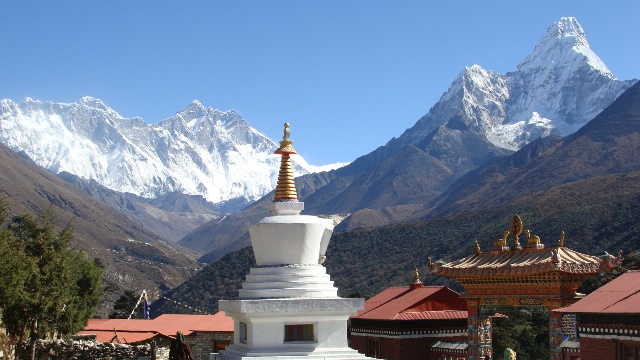
Everest two passes Trek Highlights: Highlights
- Classic circular Everest route starting from Lukla and ending back in Lukla, covering remote valleys and high mountain passes
- Crossing two of the most challenging Himalayan passes:
- Kongma La Pass (5,535m) – the highest and most demanding pass of the trek
- Cho La Pass (5,420m) – a glacial pass connecting Gokyo and the Everest regions
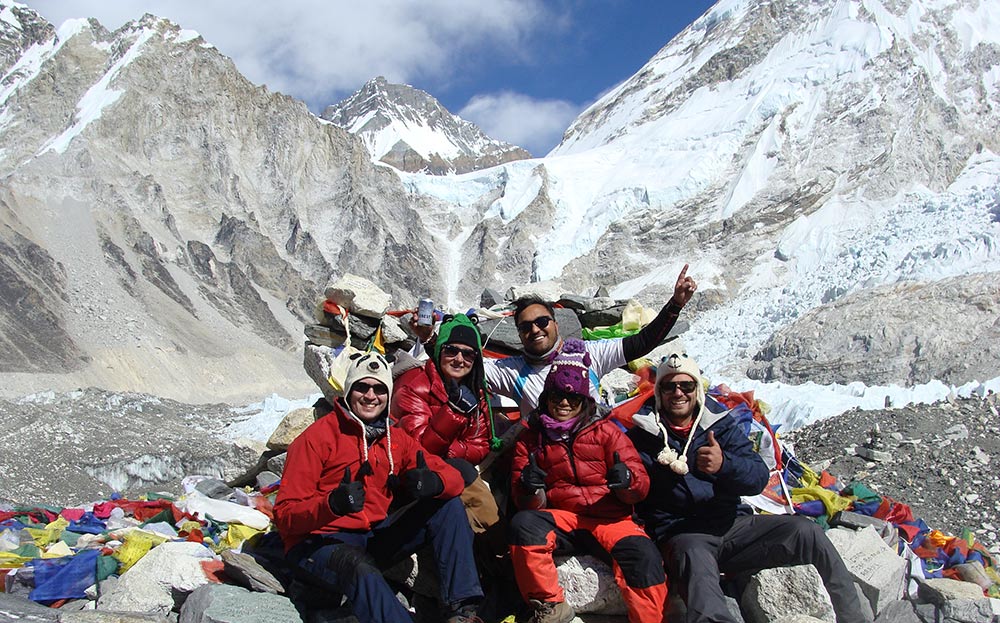
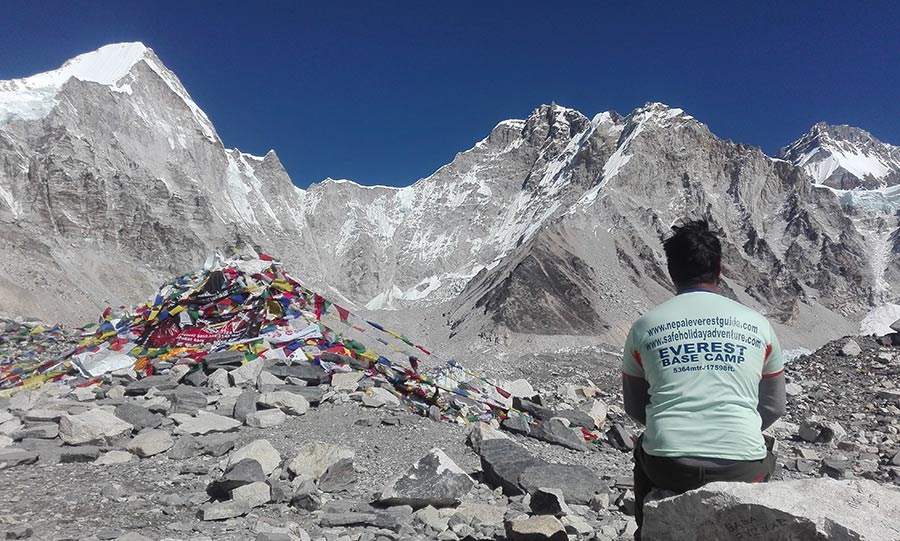
- Visit both Everest Base Camp (5,364m) and Gokyo Lakes (4,700m+) in a single trek
- Stunning panoramic views of Mount Everest, Lhotse, Makalu, Cho Oyu, and Ama Dablam
- Exploration of three major valleys: Khumbu Valley, Gokyo Valley, and Imja Valley
- Experience the dramatic Ngozumpa Glacier, the largest glacier in Nepal
- Cross suspension bridges, alpine trails, and rocky moraines at high altitude
- Climb popular viewpoints like Kala Patthar (5,545m) for Everest sunrise view
- Authentic Sherpa culture experience in villages like Namche Bazaar, Dingboche, and Gokyo
- Remote and less crowded trekking sections compared to the standard Everest Base Camp route
- High-altitude adventure with continuous glacier crossings, ridgelines, and rugged terrain
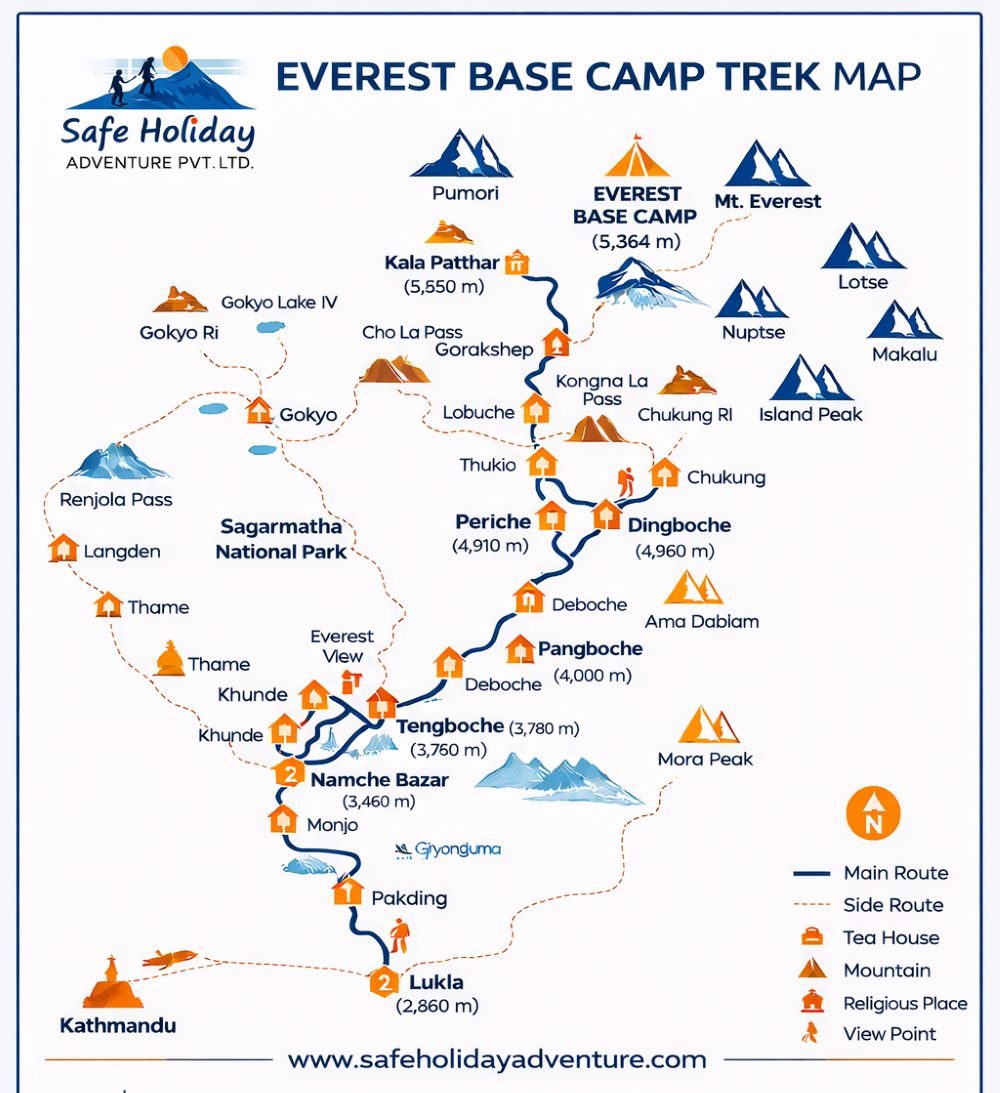
- Full loop trekking experience: Lukla → Chhukung → Kongma La → Lobuche → Everest Base Camp → Lobuche → Cho La → Gokyo → return via Namche → Lukla
Everest Two Passes Trek introduction: Overview
The Everest Two Passes Trek is one of the most adventurous and scenic routes in the Everest region. It begins with a flight from Kathmandu to Lukla, where the trek officially starts. From Lukla, the trail takes you through small villages like Phakding (2,660m) and Monjo before reaching Namche Bazaar( 3,450 m), the bustling Sherpa town. Along the way, you’ll cross several hanging bridges over deep gorges with roaring rivers below, surrounded by lush forests of pine and some Rhododendrons. The views start to open up as you ascend higher, with glimpses of snow-capped peaks like Thamserku and Kusum Kanguru.
After acclimatizing in Namche Bazaar, where you can explore the vibrant market or hike to nearby viewpoints like the Everest View Hotel, you’ll head toward Tengboche. This section of the trail offers incredible views of Ama Dablam, Everest, and Lhotse. The Tengboche Monastery is a peaceful place where trekkers can take in the spiritual atmosphere before moving deeper into the Khumbu Valley.
The trek to Everest Base Camp is challenging but rewarding, with the landscape becoming more barren and rocky. You’ll pass through Dingboche and Lobuche, where acclimatization days are essential to avoid altitude sickness. The gradual ascent to Everest Base Camp gives trekkers time to adjust to the altitude while enjoying views of Everest and surrounding peaks. The weather can be cold, especially at higher altitudes, but the tea houses provide warm meals like Dal Bhat, noodles, and soups to keep you energized. Hot tea is always a comfort after a long day of trekking.
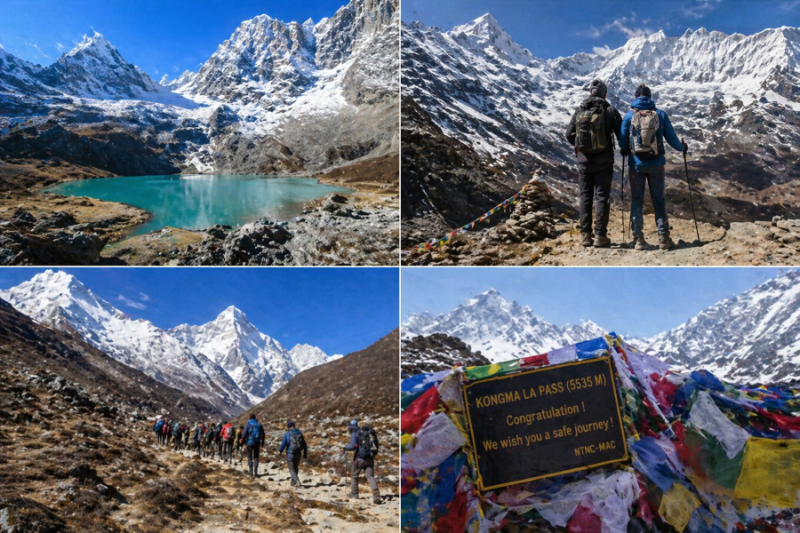
From Everest Base Camp, you’ll climb up to Kala Patthar, the best viewpoint for sunrise over Mount Everest. Standing there, surrounded by towering giants, is an unforgettable experience. Afterward, you’ll descend slightly and prepare for the first pass—Kongma La. Crossing Kongma La is a tough but thrilling adventure, with panoramic views of glaciers and towering peaks. It’s a true test of endurance, but the feeling of accomplishment as you reach the top is unmatched.
For those seeking an alternative route, the trek can instead take you through Cho La Pass and Renjo La Pass, which offer a bit more ease while still delivering stunning views of the Himalayas. The Cho La Pass takes you across icy trails and snowy ridges, leading to the serene Gokyo Valley Trails. Here, the turquoise lakes reflect the surrounding mountains, and a hike up Gokyo Ri offers breathtaking views of Everest, Makalu, and Cho Oyu.
On the way back, you’ll pass through the tranquil villages of Thame and Namche, where you can rest, enjoy warm food, and reflect on your journey. The trek ends as it started, with a flight from Lukla back to Kathmandu, but the memories of crossing high passes, seeing Everest up close, and experiencing the raw beauty of the Khumbu region will stay with you forever.
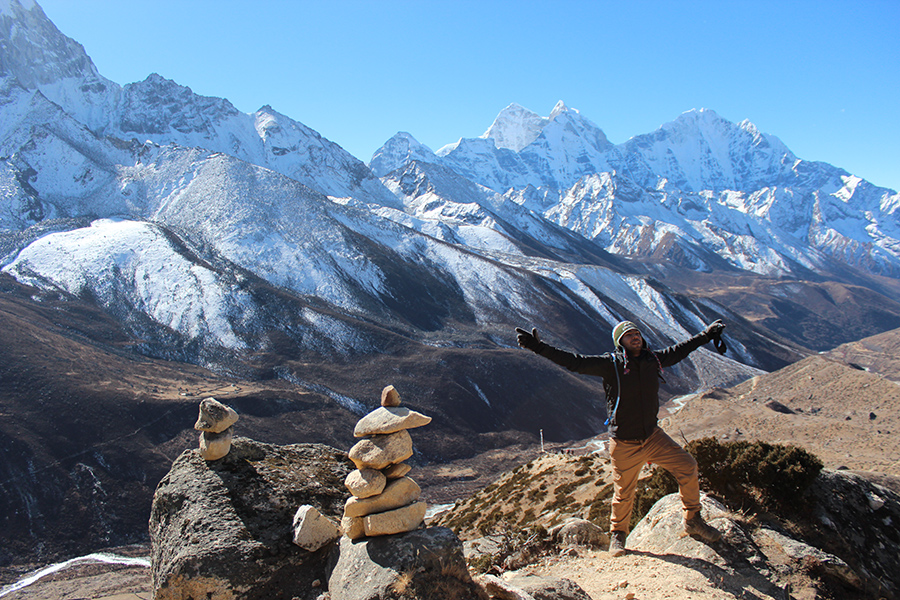
As you move through the Everest Two Passes Trek, every step feels like a journey through time and nature. The landscape changes dramatically with each passing day, from green valleys and thick forests in the lower altitudes to rugged, barren high-altitude terrain as you climb higher. The trails themselves are a mixture of well-trodden paths and rocky, sometimes icy tracks, especially near the passes. You’ll frequently find yourself crossing suspension bridges, swaying high above deep gorges with prayer flags fluttering in the wind. These bridges are an iconic part of the trek, connecting remote villages and leading you deeper into the heart of the Himalayas.
The weather on the trek can be unpredictable. While the mornings are often clear with crisp mountain views, clouds can roll in quickly, bringing snow or rain. The temperature drops significantly at night, especially as you approach the passes and higher points like Everest Base Camp and Gokyo Ri. Dressing in layers and having good Trekking gear is essential to stay warm and comfortable. Despite the cold, the mountain scenery is constantly inspiring, with towering peaks like Ama Dablam, Nuptse, and Everest always in view, reminding you why this trek is so special.
Crossing the passes—whether it’s Kongma La or the alternative route through Cho La and Renjo La—is an unforgettable part of the adventure. These high passes challenge you both mentally and physically, but the sense of achievement is immense. From the top, the views stretch endlessly across the Himalayas, with glaciers, turquoise lakes, and rugged mountain faces all around. It’s a humbling experience, standing at over 5,000 meters, knowing you’ve trekked through some of the most remote and beautiful places on Earth.
Along the way, you’ll also experience the rich Sherpa culture. The monasteries, chortens (Buddhist shrines), and spinning prayer wheels add a spiritual dimension to the trek. The Sherpa people, known for their incredible strength and kindness, are the backbone of life in the Khumbu. Their warmth and hospitality make every stop memorable, and sharing stories with fellow trekkers and locals in the tea houses creates bonds that last long after the trek is over.
As you finish the trek and return to Lukla, you’ll feel a deep sense of accomplishment, having not only reached Everest Base Camp but also crossed some of the most challenging and rewarding high-altitude passes. The memories of the towering peaks, the crisp mountain air, the serene Gokyo lakes, and the camaraderie along the way will stay with you long after the trek ends, making the Everest Two Passes Trek a once-in-a-lifetime experience.
Preparation list with 15 tips for your Everest Two Passes Trek
- Get Fit: Start a cardio and strength training routine to build endurance.
- Hike Regularly: Practice hiking on varied terrain to simulate trek conditions.
- Choose the Right Boots: Invest in good-quality hiking boots and break them in.
- Dress in Layers: Wear moisture-wicking base layers, warm middle layers, and waterproof outer layers.
- Stay Hydrated: Drink plenty of water before and during the trek to prevent altitude sickness.
- Know Altitude Symptoms: Familiarize yourself with signs of altitude sickness, like headaches and dizziness.
- Pack Light: Bring only essential items to keep your backpack light.
- Use a Checklist: Create a packing checklist to ensure you don’t forget anything.
- Plan Your Route: Study your trekking itinerary and daily distances.
- Hire a Guide: Consider hiring a local guide for safety and local insights.
- Get Permits: Ensure you have all required permits, like the Sagarmatha National Park permit.
- Check Weather: Monitor the weather conditions for your trekking dates.
- Mental Prep: Stay positive and be ready for challenges along the way.
- Travel Insurance: Get travel insurance that covers high-altitude trekking.
- Learn Local Culture: Familiarize yourself with local customs and a few basic Nepali phrases.
Why Choose the Everest Two High Pass Trek with Us?
- Experienced Nepal-based trekking company with strong Everest region operations
- Expertise in high altitude routes like Cho La Pass and Kongma La Pass
- Licensed and trained local guides with mountain safety knowledge
- Proper acclimatization planning to reduce altitude risk
- Full trek management including permits, flights, lodging, and logistics
- Reliable porter support for safer and easier trekking
- Flexible itineraries for private, group, or customized treks
- Strong local network in Everest region villages and teahouses
- Support during emergencies and weather-related changes
- Good reputation among international trekkers for organized service and safety
Weather and Temperature on Everest Two Passes Trek:
Best Time for Everest Two Passes Trek:
OutlineOutline Itinerary
Day 1: Fly to Lukla (2,800m), trek to Phakding (2,610m) – 8 km, 3-4 hrs.
Day 2: Phakding to Namche Bazaar (3,440m) – 10-11 km, 6-7 hrs.
Day 3: Acclimatization day in Namche (3,440m), hike to Everest Viewpoint (3,880m).
Day 4: Namche to Tengboche (3,860m) – 9 km, 5-6 hrs.
Day 5: Tengboche to Dingboche (4,410m) – 12 km, 5-6 hrs.
Day 6: Dingboche to Chhukung (4,730m) – 5 km, 3-4 hrs.
Day 7: Chhukung to Kongma La Pass (5,535m) and descend to Lobuche (4,910m) – 10-12 km, 8-9 hrs.
Day 8: Lobuche to Everest Base Camp (5,364m), return to Gorak Shep (5,164m) – 12 km, 7-8 hrs.
Day 9: Gorak Shep to Kala Patthar (5,545m), descend to Dzongla (4,830m) – 10-11 km, 6-7 hrs.
Day 10: Dzongla to Cho La Pass (5,420m), descend to Dragnag (4,700m) – 7 km, 6-7 hrs.
Day 11: Dragnag to Gokyo (4,790m), hike to Gokyo Ri (5,357m) – 8 km, 6-7 hrs.
Day 12: Gokyo to Dole (4010m) 7-8 hrs.
Day 13: Dole to Namche (3,450m) – 15 km, 4-5 hrs.
Day 14: Namche to Lukla (2,860m)- 20 Km, 6-7 hrs.
Day 15: Fly back to Kathmandu (1,350m).
Package Including and Excluding Services:
- Meals: Daily breakfast, lunch, and dinner, along with a cup of tea or coffee. Fresh fruits will be provided each evening after dinner.
- Accommodations: Twin-sharing (Tea House) accommodations,
- Permits: Sagarmatha National Park entry permit and Khumbu Pashang Lhamu Rural Municipality fees.
- Flights: Round-trip Kathmandu to Lukla flights, including airport transfers. (During high season, flights may operate from Ramechhap Airport, 4-5 hours from Kathmandu.)
- Guide: English-speaking, government-licensed guide, including their salary, food, accommodation, transport, and insurance.
- Emergency Heli Services: Arrangement for emergency helicopter services, billed to your travel insurance company.
- Equipment: Use of a sleeping bag, down jacket, and walking poles (if you don’t have your own). A maintenance fee of $10 each will be charged for these items.
- Taxes and Fees: Government taxes, service charges, and official expenses.
- Health Monitoring: Use of an oximeter to check pulse and oxygen saturation, ensuring safety during the trek.
- Assistant Guide: An additional guide for groups larger than eight trekkers.
- Airport Transfers: International airport pick-up and drop-off.
- Insurance: Travel medical insurance (recommended).
- Visa Fees: Nepal visa fee ($50 for a 30-day visa on arrival).
- International Flights: Costs related to international airfare.
- Personal Costs: Personal expenses, including souvenirs.
- Beverages: Alcoholic and non-alcoholic drinks, including hot beverages.
- Additional Services: Hot showers and battery charging fees during the trek.
- Tipping: Tips for your guide, porter, and driver (tipping is customary).
- Desserts: Sweets and desserts purchased along the trek or in tea houses.
- Excess Baggage: Charges for excess baggage over 15 kg for the Lukla flight ($1.5 per kg).
Note: The price I’ve quoted is for a group of 2-3 people. If your group has more members, we can offer a larger discount. Conversely, if you’re a solo trekker, the cost will be slightly higher. Thank you!
Dates and Availability Departures
All our published dates are guaranteed departures. We also provide customized departures tailored to your travel plans.
May 2026
June 2026
August 2026
September 2026
October 2026
November 2026
December 2026
Travellers Reviews
Gill Brass
Poland | April,2026
Safe & Successful Everest Two Passes Trek
We had an incredible experience on the Everest Two Passes Trek with our guide, Ambar. He was professional, friendly, and always ensured our safety and comfort throughout the journey.
Crossing the high passes felt much easier with his guidance and support. His knowledge of the mountains and local culture made the trek even more enjoyable.
We highly recommend this adventure, especially trekking with Ambar for a safe and memorable experience.
Gill Brass & Wife
Poland
Genaral Trip InfoInfos
Everest Two Passes Trek route explanation:
Everest Two Passes Trek difficulty:
Everest Two Passes Trek distance:
The Everest Two Passes Trek (Kongma La and Cho La route) covers an approximate walking distance of 120 to 140 kilometers from Lukla and back to Lukla. This distance includes the main trail through Namche Bazaar, Everest Base Camp, Gokyo Valley, and the two high mountain passes. Depending on the itinerary and side trips like Kala Patthar or Gokyo Ri, the total trekking distance can extend up to around 160 kilometers.
The exact distance may vary slightly between trekking companies because of route choices and extra acclimatization hikes. On average, trekkers walk 10 to 15 kilometers per day, but pass-crossing days feel longer due to steep ascents, rocky terrain, and high altitude. Although the distance is moderate in numbers, the challenging mountain environment makes this trek physically demanding and adventurous.
Everest Two Passes Trek during spring and Autumn season:
Tea house in Everest Two Passes Trek:
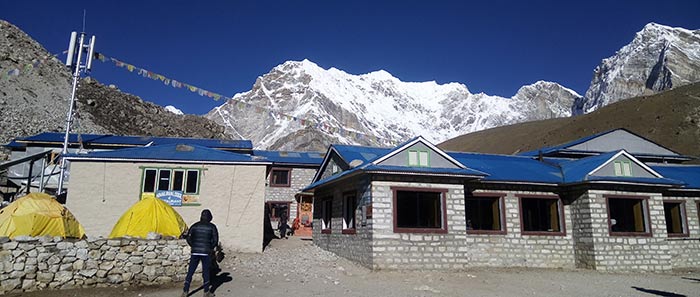
Tea houses on the Everest Two Passes Trek are the main form of accommodation along the route, from Lukla up to high Himalayan villages like Gokyo, Dzongla, Lobuche, and Gorak Shep. These are simple mountain lodges run by local families, offering basic rooms with twin beds, blankets, and shared bathroom facilities. As the altitude increases, services become more limited, but the warmth of hospitality remains strong.
Lower villages provide more comfort, while high-altitude stops near Cho La and Kongma La passes are more rustic and cold. Meals are served in a shared dining area, creating a friendly trekking atmosphere. Electricity, WiFi, and hot showers may be available in some places for an extra cost. Tea houses make the Everest Two Passes Trek possible without camping, giving trekkers a safe, cultural, and authentic Himalayan experience.
Everest Two Passes Trek food options:
Tea houses on the Everest Two Passes Trek are the main form of accommodation along the trail in the Khumbu region. They are locally run lodges that provide trekkers with a warm place to sleep after long walking days over high mountain passes like Kongma La and Cho La.
Rooms are usually simple, with twin beds, blankets, and shared bathroom facilities. Although basic, they are clean and designed to support trekkers in high altitude conditions. The atmosphere is friendly, often run by Sherpa families who welcome guests warmly.
Most tea houses also offer fresh meals such as dal bhat, soups, noodles, rice dishes, and hot drinks. Charging and Wi-Fi may be available in some villages for an extra cost, making tea houses an essential part of the trekking experience.
Everest Two Passes Trek (15 Days) – Cost Breakdown
Total: $1,499 per person
- Agency service & logistics – $250
Trip management, permits handling, support - Flights (Kathmandu ↔ Lukla) – $380
Round-trip airfare + taxes - Guide & porter – $320
Licensed guide, porter, insurance, wages - Accommodation – $180
14 nights tea house lodging - Meals during trek – $250
Breakfast, lunch, dinner (full board) - Permits & fees – $60
National park + local permits - Transport – $30
Airport pickup/drop in Kathmandu - Trek support & safety – $29
First aid, coordination, logistics
Total Package: $1,499 per person
Not included: visa, insurance, international flights, personal expenses, tips.
Detailed ItineraryItinerary
Fly to Lukla (2,800m), trek to Phakding (2,610m) – 8 km, 3-4 hrs
Your Everest Two Passes Trek starts with an exciting 30-minute flight from Kathmandu to Lukla (2,800m), offering stunning aerial views of the Himalayas. After landing, the 8 km trek to Phakding (2,610m) begins. The trail gently descends, passing through lush forests, traditional Sherpa villages, mani stones, and crossing several suspension bridges over the Dudh Koshi River. The walk takes 3-4 hours, offering scenic views of terraced fields and peaceful riverbanks. In Phakding, you’ll stay in a cozy tea house, where you can enjoy simple meals like Dal Bhat and relax by the river before continuing the trek.
Accommodation : Teahouse
Phakding to Namche Bazaar (3,440m) – 10-11 km, 6-7 hrs
On Day 2 of your Everest Two Passes Trek, we’ll leave Phakding early in the morning and head toward Namche Bazaar (3,440m), a vibrant Sherpa town and the gateway to the Everest region. This trek covers about 10-11 kilometers and takes approximately 6-7 hours.
The trail begins with a gentle ascent along the Dudh Koshi River, providing beautiful views of the surrounding mountains. You’ll pass through lush pine forests and charming villages, where you can see local life and perhaps catch a glimpse of yaks carrying supplies. Along the way, we’ll cross several suspension bridges, adorned with colorful prayer flags, adding a touch of spirituality to our journey.
As we approach Namche, the trail becomes steeper, but the stunning scenery and the anticipation of reaching the bustling town will keep you motivated. Namche Bazaar is known for its vibrant market, cozy cafes, and incredible views of peaks like Ama Dablam and Everest.
Upon arrival, you’ll check into a tea house for a well-deserved rest. This acclimatization stop is crucial, allowing your body to adjust to the altitude. In the evening, you can explore the town, enjoy local food, and soak in the incredible mountain atmosphere before our next adventures.
Accommodation : Teahouse
Acclimatization day in Namche (3,440m), hike to Everest Viewpoint (3,880m)
On your acclimatization day in Namche Bazaar (3,440m), we’ll focus on helping your body adjust to the altitude while enjoying stunning views. After a hearty breakfast, we’ll embark on a hike to the Everest Viewpoint (3,880m), just a short distance from town.
The trek to the viewpoint takes about 2-3 hours and is a gradual ascent through beautiful pine forests. As we climb higher, the views become more breathtaking, with panoramic sights of iconic peaks like Ama Dablam, Thamserku, and, of course, Everest.
At the viewpoint, you can take time to soak in the scenery, capture photos, and appreciate the majesty of the Himalayas. There’s also a chance to visit the Everest View Hotel, where you can enjoy a hot drink while gazing at the mountains.
Afterward, we’ll return to Namche for lunch and have the afternoon to explore the town. You can visit the local market, check out the Sherpa Museum, or simply relax in one of the cozy cafes. This day is not only about acclimatization but also about experiencing the rich culture and stunning beauty of the region before continuing our trek.
Accommodation : Teahouse
Namche to Tengboche (3,860m) – 9 km, 5-6 hrs
On Day 4, we will trek from Namche Bazaar to Tengboche (3,860m). This hike is about 9 kilometers and will take us 5-6 hours.
We’ll start with a gentle descent, enjoying beautiful views of the mountains. The trail leads us through pine forests and offers glimpses of local wildlife. Along the way, we’ll pass by traditional Sherpa villages.
As we get closer to Tengboche, the trail climbs steadily. In Tengboche, you’ll find the famous Tengboche Monastery, one of the largest in the region. This is a perfect spot to take in the stunning views of Ama Dablam and the surrounding peaks.
After exploring the monastery, we’ll settle into a tea house for the night, where you can enjoy local food and relax in this peaceful mountain setting.
Accommodation : Teahouse
Tengboche to Dingboche (4,410m) – 12 km, 5-6 hrs
The trail from Tengboche to Dingboche (4,410m) is a beautiful and diverse journey, spanning about 12 kilometers and taking around 5-6 hours.
As we set out from Tengboche, the path initially descends through lush pine forests, offering glimpses of the stunning Ama Dablam (6,812m) to the south. The serene surroundings may also allow us to spot some wildlife, such as Himalayan tahr, musk deer, and various bird species like pheasants and colorful finches.
As we continue, the trail opens up to expansive views of the Khumbu Valley, with the Dudh Koshi River winding below. You’ll see the majestic peaks of Nuptse (7,861m) and Lhotse (8,516m) rising in the distance, creating a breathtaking backdrop.
The trail then gradually climbs toward Dingboche, where the landscape becomes more rugged and alpine. Along the way, you may encounter fields of barley and potatoes, typical of the Sherpa farming culture.
Upon reaching Dingboche, you’ll be rewarded with incredible views of the surrounding mountains, including Island Peak (6,189m) and the towering ridge of Makalu (8,485m) in the east. This charming village, with its stone walls and traditional houses, provides a perfect setting for a restful evening as you acclimatize to the altitude.
Accommodation : Teahouse
Dingboche to Chhukung (4,730m) – 5 km, 3-4 hrs
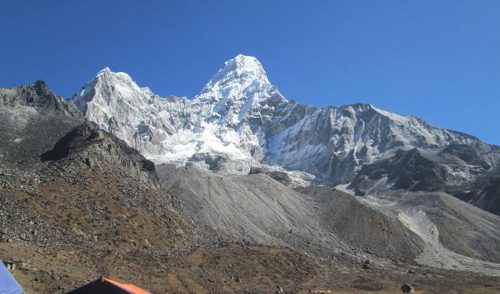
The trek from Dingboche to Chhukung (4,730 m) spans 5 km and takes about 3-4 hours. Starting your day in Dingboche, enjoy breakfast surrounded by stunning mountain views. As you begin, the well-defined trail offers breathtaking sights of Ama Dablam and Lhotse. You’ll cross a river on a sturdy bridge, with the sound of flowing water in the background. The trail gradually steepens, revealing impressive rock formations and panoramic vistas. Upon reaching Chhukung, take in the majestic views of Island Peak and the surrounding mountains, making it an ideal base for those interested in climbing and further exploration.
Accommodation : Teahouse
Chhukung to Kongma La Pass (5,535m) and descend to Lobuche (4,910m) – 10-12 km, 8-9 hrs
Begin your day early in Chhukung, fueled by a hearty breakfast and the excitement of crossing Kongma La Pass. The trek starts with a gradual ascent, surrounded by stunning views of Island Peak and the towering Ama Dablam. As you hike, the trail becomes steeper and more rugged, leading you toward the pass.
After several hours of trekking, you will reach Kongma La Pass at 5,535 m. Take a moment to enjoy the breathtaking panoramic views of the Khumbu region and the surrounding peaks, including Makalu and Lhotse. The high altitude offers a sense of accomplishment as you gaze at the stunning landscapes.
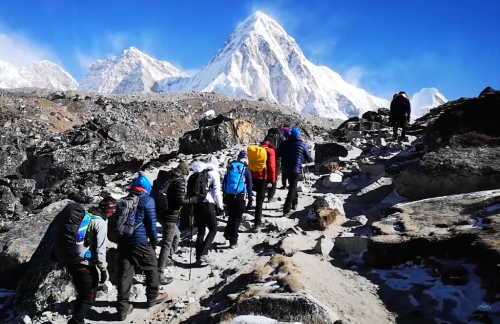
After resting, begin your descent toward Lobuche. The trail can be rocky and steep, requiring careful footing. As you descend, enjoy the views of the glacier and the valley below. The walk will take several hours, but the changing scenery makes it worthwhile.
Upon arriving in Lobuche, you’ll be welcomed by the beautiful mountain backdrop. Take some time to relax, enjoy dinner, and prepare for the next leg of your Everest adventure. This challenging day is rewarding, filled with unforgettable sights and a true sense of the Himalayan wilderness.
Accommodation : Teahouse
Lobuche to Everest Base Camp (5,364m), return to Gorak Shep (5,164m) – 12 km, 7-8 hrs
This morning, you will wake up in Lobuche, surrounded by the majestic peaks of the Himalayas. After a hearty breakfast, you’ll begin your trek toward Everest Base Camp. The trail from Lobuche offers stunning views of the surrounding mountains, including the towering Nuptse and the dramatic Khumbu Glacier.
As you continue, you will approach the Kangma La Pass, which sits at an altitude of about 5,200 meters. The ascent can be steep, but the breathtaking views make it worthwhile. From this vantage point, you can see the rugged landscape of the Everest region unfold before you, with endless vistas of snow-capped peaks.
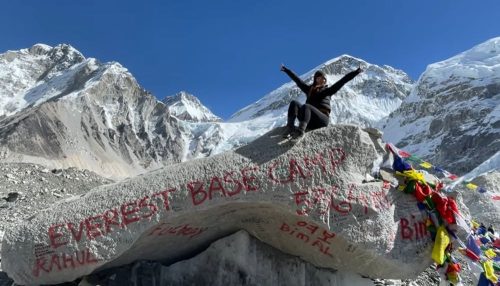
After crossing the pass, the trail descends gently as you make your way towards Everest Base Camp. The terrain is rocky, and you’ll be surrounded by the striking beauty of the Khumbu Glacier. In about 3-4 hours, you will finally reach Everest Base Camp (5,364m). Here, you can feel the excitement of standing at the foot of the world’s highest mountain, capturing the moment with photos and enjoying the unique atmosphere of this iconic place.
After spending some time at Base Camp, it’s time to start your journey back to Gorak Shep. The return trek will take approximately 3-4 hours, and as you walk, you’ll reflect on the incredible experience of the day. Arriving back in Gorak Shep in the late afternoon or early evening, you’ll feel a sense of accomplishment, having trekked to one of the most famous locations in the world.
Accommodation : Teahouse
Gorak Shep to Kala Patthar and Descend to Dzongla
Today starts early in Gorak Shep, as you prepare for a rewarding trek to Kala Patthar, known for its stunning panoramic views of Mount Everest. After breakfast, you’ll set out on the trail, which is a steep ascent leading you to an altitude of 5,545 meters. The journey to Kala Patthar takes about 2-3 hours, and as you climb higher, the breathtaking views will motivate you to keep going.
Reaching the top of Kala Patthar is a highlight of your trek. Take time to enjoy the spectacular views of Everest and the surrounding peaks, including Lhotse and Nuptse. The sunrise from this vantage point is particularly magical, casting golden hues on the snow-capped mountains.
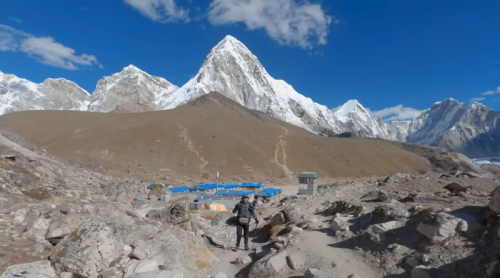
After soaking in the views and capturing photos, you’ll begin your descent back to Gorak Shep for a quick rest and lunch. Then, you’ll continue your trek down toward Dzongla (4,830m). The trail from Gorak Shep to Dzongla is a mix of rocky paths and gentle slopes, and it typically takes about 3-4 hours to reach your destination.
As you walk, enjoy the changing scenery and the tranquility of the mountains. Upon arriving in Dzongla, you’ll settle in for the night, reflecting on the amazing sights of the day. This day combines challenging climbs with unforgettable views, making it a memorable part of your adventure in the Everest region.
Accommodation : Teahouse
Dzongla to Cho La Pass (5,420m), descend to Dragnag (4,700m) – 7 km, 6-7 hrs
Today’s trek begins in Dzongla, and you’ll start by heading toward Cho La Pass, which stands at an altitude of 5,420 meters. After an early breakfast, you’ll set out on a challenging ascent that takes about 3-4 hours. The trail can be steep and rocky, so be prepared for some effort.
As you climb, the stunning views of the surrounding peaks will motivate you. Keep an eye out for beautiful glacial lakes along the way. Reaching Cho La Pass is a rewarding experience, as you’ll be greeted by breathtaking vistas of the Himalayas. Take a moment to catch your breath, snap some photos, and enjoy the sense of accomplishment.
After enjoying the views at the pass, it’s time to descend toward Dragnag (4,700m). The descent can be tricky, with rocky paths and some steep sections, so take your time and be cautious. This part of the trek usually takes around 2-3 hours.
Once you arrive in Dragnag, you can relax and reflect on the day’s adventures. This day’s journey through beautiful landscapes and high-altitude challenges makes it a memorable part of your trek in the Everest region. Enjoy a well-deserved rest in preparation for the next stages of your adventure!
Accommodation : Teahouse
Dragnag to Gokyo (4,790m), hike to Gokyo Ri (5,357m) – 8 km, 6-7 hrs
Today, you will start your trek in Dragnag and head to Gokyo, which is at 4,790 meters. After breakfast, the trail will take you through beautiful landscapes, with amazing views of lakes and mountains. It usually takes about 3-4 hours to reach Gokyo.
As you arrive, you’ll see the stunning Gokyo Lakes, some of the highest lakes in the world. Take a moment to enjoy the scenery before settling into your accommodation.
After a short rest and lunch, you will hike to Gokyo Ri, which is at 5,357 meters. This hike is steep but worth it, taking about 2-3 hours. As you climb, the views will become more and more beautiful.
At the top of Gokyo Ri, you will see incredible views of Mount Everest, Makalu, and Cho Oyu, along with the sparkling lakes below. Take your time to enjoy the view and take photos.
After your hike, return to Gokyo for the night. This day is special, filled with the beauty of Gokyo and the amazing sights from Gokyo Ri!
Accommodation : Teahouse
Gokyo to Dole (4010m) 7-8 hrs
Today is an easy day as you descend from Gokyo to Dole (4,010m). The trail offers stunning views and a fresh walking experience in open areas along the mountain ridges. As you walk, you’ll enjoy breathtaking sights of towering peaks like Cho Oyu, Thamserku, Cholatse, Tawache, and the iconic Ama Dablam. The descent allows you to appreciate the beauty of the Himalayas, with clear skies and panoramic views. This gentle trek through beautiful landscapes makes for a relaxing and enjoyable day, allowing you to soak in the natural wonders around you.
Accommodation : Teahouse
Dole to Namche (3,450m) – 15 km, 4-5 hrs
Today, you will trek from Dole to Namche (3,450m), covering 15 km in about 4-5 hours. The day begins with a descent through beautiful rhododendron forests, which lasts about 40-50 minutes. You’ll then reach Phorse Thanga, where the trail starts to ascend steeply for about 50 minutes to Mong Danda.
From Mong Danda, you’ll enjoy trekking in open areas along the mountain cliffs, taking in stunning views. As you continue, you’ll descend to Sanasa and Kyanjuma, where the trail flattens out for an easy two-hour walk to Namche.
If you’re interested in exploring more, from Mong Danda, you can take a short detour to Sanasa and then follow the right trail to Khumjung Village. Here, you can see traditional Sherpa houses and farmland before heading back down to Namche. This day combines beautiful nature and cultural experiences, making it a memorable trek!
Accommodation : Teahouse
Namche to Lukla (2,860m)- 20 Km, 6-7 hrs
Today is your final walking day as you trek from Namche to Lukla (2,860m), covering 20 km in about 6-7 hours. The trek starts with a pleasant descent, allowing you to enjoy the beautiful views of the surrounding mountains and valleys.
As you walk, you’ll pass through charming villages and lush landscapes, making the journey enjoyable. The path is mostly downhill, providing a gentle way to end your trek. However, be prepared for a 45-minute uphill climb just before reaching Lukla.
Once you arrive in Lukla, take a moment to reflect on your incredible journey through the Everest region. Celebrate your accomplishments and enjoy the final evening with your trekking group!
Accommodation : Teahouse
Fly Back to Kathmandu (1350m)
On your final day, you’ll fly from Lukla back to Kathmandu (1,350m). It’s best to start early in the morning for your flight. However, due to air traffic in Kathmandu, your flight might be diverted to Ramechhap Manthali Airport.
If this happens, don’t worry! From Manthali, you’ll take a scenic drive that lasts about 3-4 hours to reach Kathmandu. Enjoy the beautiful landscapes along the way as you reflect on your incredible trekking adventure. Once in Kathmandu, you’ll have time to relax and explore the city or prepare for your onward journey.
Accommodation : Hotel
Everest Two Passes Trek FAQs
To prepare, engage in regular cardiovascular and strength training exercises. Hiking in varied terrains and altitudes can help your body acclimatize. Additionally, practice with a loaded backpack to get used to carrying your gear.
Daily trekking usually lasts between 6 to 8 hours, depending on the day’s itinerary. Some days may be shorter, while others can be longer, especially when crossing the passes.
Most Tea Houses provide charging facilities, but there may be a fee. However, power availability can be limited, so carrying a power bank is advisable.
While it’s possible to trek independently, hiring a guide is highly recommended for safety, navigation, and local insights. They can also assist in case of emergencies.
If you notice symptoms of altitude sickness, such as headaches, nausea, or dizziness, inform your guide immediately. It’s crucial to descend to a lower altitude and rest until symptoms improve.
Sturdy, waterproof trekking boots with good ankle support are essential. Make sure they are well-broken-in before the trek to avoid blisters.
It’s advisable to carry enough cash for personal expenses, tips, and any snacks or drinks along the way. ATMs are available in Namche Bazaar, but it’s wise to bring cash from Kathmandu.
Wi-Fi is available in some Tea Houses, primarily in larger villages like Namche and Gorak Shep. However, the connection may be slow and inconsistent.
The main health risks include altitude sickness, dehydration, and exhaustion. Being aware of symptoms and taking proper precautions can help mitigate these risks.
Yes, many trekking agencies, including Safe Holiday Adventure Pvt. Ltd., offer customizable itineraries based on your preferences, fitness level, and time constraints.
The Sherpa culture is rich in tradition, with strong ties to Buddhism. Visitors can experience this through local customs, festivals, and by visiting monasteries, enhancing the cultural experience of the trek.
Most Tea Houses offer vegetarian meals, but if you have special dietary requirements, inform your trekking agency in advance so they can accommodate your needs.
Temperatures can vary greatly, with daytime temperatures ranging from 5°C to 20°C (41°F to 68°F) and nighttime temperatures dropping below freezing, especially at higher altitudes.
Always carry a list of emergency contacts, including your trekking agency. Your guide will also have procedures in place for emergencies, including evacuation plans if necessary.
Yes, many trekkers choose to extend their journey to areas like Renjola Pass, Island peak climbing or the Annapurna region. Discuss your interests with your trekking agency to plan extensions that suit your schedule.
Refund & Cancellation Policy
- Booking requires 20% non-refundable deposit (Nepal) or 100% upfront (Tibet/Bhutan).
- Remaining payment due before the trip or on arrival (trip-dependent).
Cancellation charges:
- 31+ days: 20%
- 16–30 days: 45%
- 8–15 days: 75%
- 7 days or less: 90%
- Prices may change due to flights, taxes, or exchange rates.
- Trip changes are allowed, but extra costs apply.
- If the company cancels, a full refund, except for unavoidable events (some costs deducted).
- Good health and travel insurance are mandatory.
- No refund if removed for unsafe or illegal behavior.
- Travel involves personal risk, which the client accepts.