STAY CONNECTED


Government Licence No.: 131483/071/072
STAY CONNECTED
Are you looking for a short yet thrilling Himalayan adventure?
The 10-Day Everest Base Camp Trek offers breathtaking mountain views, rich Sherpa culture, and the unforgettable experience of standing beneath Mount Everest. Starting with a scenic flight to Lukla, the trek takes you through Namche Bazaar, Tengboche, and Dingboche, leading to the stunning Kala Patthar viewpoint. Ideal for fit trekkers with limited time, this fast-paced journey delivers the ultimate Everest experience in just 10 days.


The Everest Base Camp 10-day trek is more than a hike—it’s a powerful journey into the heart of the Himalayas. Each step through this high-altitude wilderness leaves a lasting impact on the soul. At Safe Holiday Adventure, we offer this unique experience for adventurers ready to explore the world’s most iconic mountain region.
Our adventure begins in the colorful city of Kathmandu, where cultures mix and excitement fills the air. Travelers from around the world gather here, preparing for a trek they’ll never forget. After organizing permits and packing up, we take a thrilling flight to Lukla (Tenzing-Hillary Airport)—a small airstrip surrounded by high peaks.
In the busiest trekking seasons—October, November, April, and May—flights may shift to Ramechhap Manthali Airport to reduce air traffic. No matter the route, landing in Lukla marks the real start of our journey into the mountains.
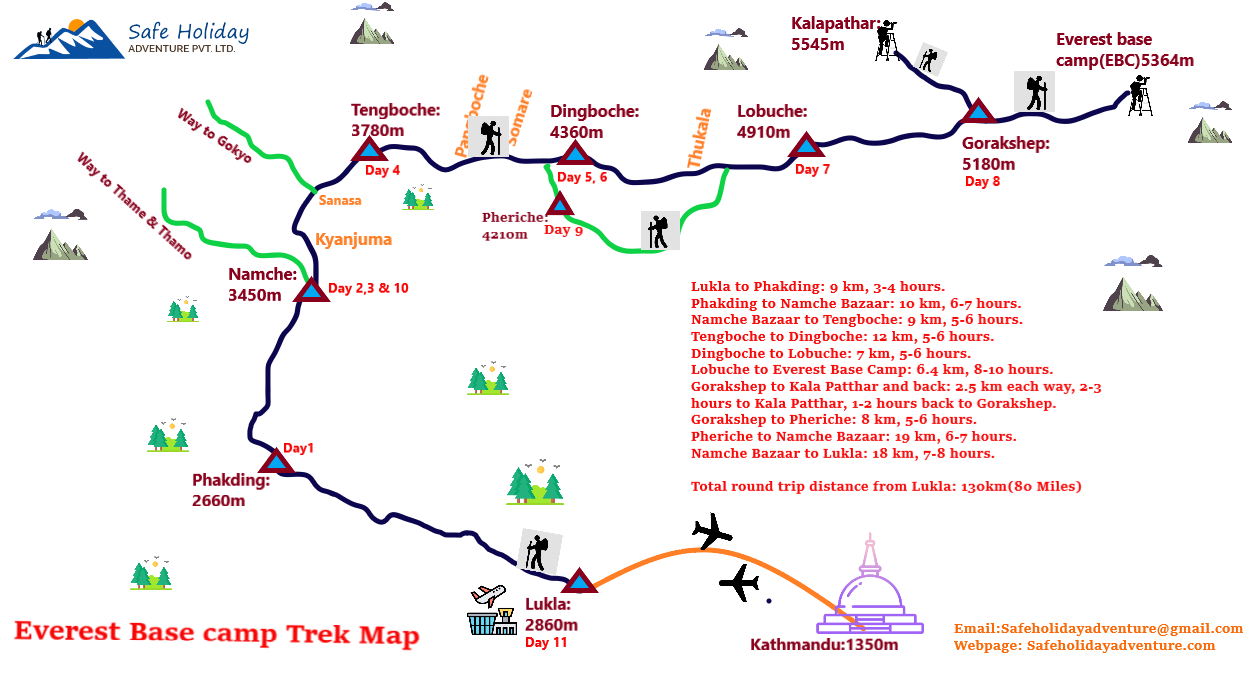
From Lukla, we set off on foot. The trail leads us through pine forests, farmlands, and friendly Sherpa villages. Our first night is spent in Phakding (2,660m), a peaceful village by the river. The next day, we trek uphill to Namche Bazaar (3,450m)—the vibrant heart of Sherpa culture. Along the way, we cross high suspension bridges and pass colorful prayer flags fluttering in the breeze.
Namche offers cozy lodges, bakeries, and stunning views of snowy peaks. It’s the perfect place to rest and adapt to the growing altitude.
As we ascend higher, the scenery changes dramatically. Snow-capped mountains dominate the skyline, and the air grows thinner and cleaner. We visit Tengboche (3,860m), home to a famous monastery with panoramic views of Everest and Ama Dablam.
Our journey continues to Dingboche (4,410m), a peaceful valley surrounded by mountains. The slower pace helps our bodies adjust to the altitude. These days are filled with beauty, stillness, and a deep connection with nature.
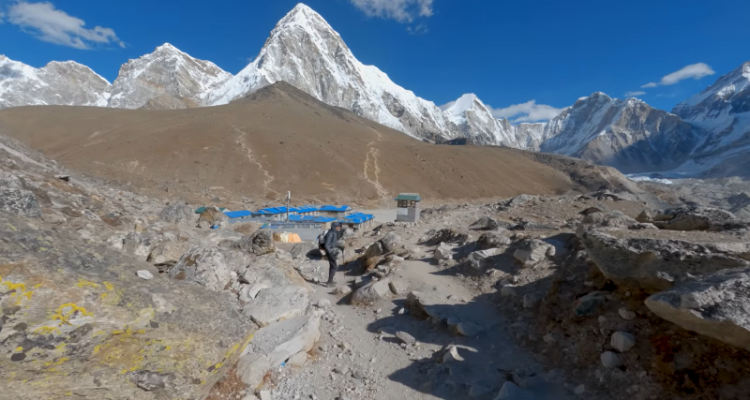
At last, we reach Gorakshep (5,180m), the last stop before Everest Base Camp (5,364m). The path here is rugged and icy, demanding careful steps and strong willpower. But nothing compares to standing at the base of the world’s tallest peak. The feeling is emotional, humbling, and unforgettable.
Early the next morning, we climb Kalapathar (5,550m) for one of the best sunrise views in the world. The golden light hits Everest, creating a moment that will stay with you forever.
After reaching base camp and Kalapathar, we begin our descent. With each step down, we breathe easier, but the memories remain vivid. The mountains have changed us. Though we leave them behind, the experience stays etched in our hearts.
To fully enjoy the 10-day trek, it’s important to train in advance. Here’s how:
With both body and mind prepared, you’ll enjoy a safer, more fulfilling trek.
This shorter itinerary is ideal for physically fit trekkers or those with limited time. Unlike standard routes, it skips extra acclimatization days, so it suits experienced hikers or active travelers. However, due to the pace, proper preparation is essential.
If you’re short on time but ready for adventure, this version lets you experience Everest’s beauty in just 10 days, without missing the highlights.
Along the way, teahouses offer simple and cozy places to sleep—usually twin-sharing rooms with blankets and shared bathrooms. Meals are served in warm dining halls and include local Nepali dishes, Tibetan meals, and some Western options.
At higher altitudes, facilities are basic but clean. In remote spots, you might even stay in tented camps. Despite the simplicity, the hospitality is warm and welcoming.
For more comfort, luxury lodges with hot showers and Wi-Fi are available in select areas.
Here are practical tips to make your trek safe and enjoyable:
| Day | Route | Distance (km) | Duration (hrs) | Elevation Start (m) | Elevation End (m) | Avg. Temperature (°C) | Key Highlights |
|---|---|---|---|---|---|---|---|
| 1 | Kathmandu to Lukla (flight) + trek to Phakding | 8 | 3 | 2,860 | 2,610 | 10–15 | Scenic Lukla flight, Sherpa villages |
| 2 | Phakding to Namche Bazaar | 9 | 6 | 2,610 | 3,440 | 7–12 | Suspension bridges, pine forests |
| 3 | Acclimatization day at Namche Bazaar | 0 | 0 | 3,440 | 3,440 | 5–10 | Visit the Everest View Hotel, and experience local culture |
| 4 | Namche Bazaar to Tengboche | 10 | 5 | 3,440 | 3,870 | 5–10 | Tengboche Monastery, panoramic mountain views |
| 5 | Tengboche to Dingboche | 11 | 5 | 3,870 | 4,410 | 0–7 | Rhododendron forests, Himalayan views |
| 6 | Acclimatization day at Dingboche | 0 | 0 | 4,410 | 4,410 | -5 to 5 | Short hikes, mountain views, rest day |
| 7 | Dingboche to Lobuche | 7 | 4 | 4,410 | 4,910 | -5 to 5 | Glacial landscapes, Everest panorama |
| 8 | Lobuche to Gorak Shep to Everest Base Camp | 15 | 7 | 4,910 | 5,364 | -10 to 0 | Everest Base Camp, Khumbu Glacier |
| 9 | Everest Base Camp to Gorak Shep to Pheriche | 15 | 7 | 5,364 | 4,240 | -5 to 5 | Glacier views, descending trail |
| 10 | Pheriche to Namche Bazaar | 20 | 7 | 4,240 | 3,440 | 5–10 | Descending trail, Sherpa villages |
| 11 | Namche Bazaar to Lukla | 19 | 6 | 3,440 | 2,860 | 10–15 | Final trek day, forest trails |
| 12 | Lukla to Kathmandu (flight) | 0 | 1 (flight) | 2,860 | 1,400 | 20–25 (Kathmandu) | Scenic flight, arrival in Kathmandu |
Note: Dear valued customer, Our 10-day Everest Base Camp trek is ideal for those who have limited time and still want to reach EBC. To help you save money, we offer a Bed and Breakfast option, which reduces the cost by not including lunch and dinner. Additionally, we provide guide services ranging from $28 to $50 per day.
Facts:
The first day of the Everest Base Camp trek from Kathmandu to Phakding via Lukla is exhilarating and filled with anticipation. The journey typically begins with an early morning flight from Kathmandu to Lukla, offering breathtaking views of the Himalayas.
Upon landing in Lukla, the real adventure begins as you step into the heart of the Khumbu region. Lukla’s small airstrip, nestled amidst towering mountains, is an experience in itself. The altitude change from Kathmandu to Lukla is noticeable, but not overwhelming.
The trek from Lukla to Phakding takes you through picturesque Sherpa villages, lush forests, and along the Dudh Koshi River. The trail undulates gently, providing a good introduction to trekking in the Himalayas. You’ll pass through prayer flags, mani walls, and quaint tea houses, immersing yourself in the rich cultural and natural beauty.
Arriving in Phakding, you’ll feel a sense of accomplishment as you settle into your teahouse accommodation and reflect on the day’s journey. The peaceful ambiance of Phakding, with its stunning mountain backdrop, is the perfect place to unwind and prepare for the days ahead on your Everest Base Camp adventure.
Facts:
The journey from Phakding to Namche Bazaar on the second day of your Everest Base Camp trek is scenic. Following the Dudh Koshi River, you’ll traverse suspension bridges adorned with prayer flags and pass through picturesque rhododendron forests. Your midday stop at Jorsalley offers a chance to refuel with a satisfying lunch. Continuing your ascent, the trail treats you to breathtaking mountain vistas until Namche Bazaar finally emerges in the distance, nestled among the peaks. Upon arrival, explore this vibrant market town, acclimate to the altitude, and revel in the stunning surroundings before retiring for the night.
Fact:
Today, our journey takes us from Namche Bazaar to Tengboche, a trek spanning 5-6 hours along the rugged cliffs of mountain trails. Setting off, the initial 10 minutes of our walk is a steep ascent, yet the vista that unfolds before us makes every step worthwhile. The trail soon evens out, offering a wider path along the cliff’s edge, granting us ample opportunity to soak in the breathtaking surroundings.
After roughly an hour and a half, we reach Kyanjuma, passing through Sanasa along the way, where the path diverges towards the Gokyo Valley trek. We veer left, descending towards Funki Thanga, where we pause for a well-deserved lunch break. Energized and refueled, we embark on the next leg of our journey—a challenging two-hour ascent through the enchanting alpine forest towards Tengboche.
Perched atop the mountains, Tengboche awaits us with its serene beauty. If the weather permits, we may be treated to a magnificent sunset, casting its golden hues upon the majestic peaks of Everest, a sight to behold and cherish for a lifetime.
Facts:
Today’s trek from Tengboche to Dingboche is short and easy. After breakfast, we walk downhill for about 20 minutes through pretty forests to Deboche. Then, we cross a suspension bridge and climb for 20 minutes until we reach Pangboche village. From there, we can see amazing mountains like Ama Dablam, Nupse, and Lhotse.
After Pangboche, the trail follows a valley edge for around 40 minutes until we get to Somare, where we stop for lunch and a rest. Then, we continue uphill, gradually, for about 2 hours until we reach Dingboche.
Dingboche is a sizable Sherpa village offering numerous accommodations, dining options, and shopping facilities. Most Trekkers spend an additional night here to acclimatize to the altitude. However, we will proceed to Lobuche tomorrow.
Facts:
Starting from Dingboche, our trek to Lobuche will be tough but fulfilling. We leave Dingboche slowly, following the path up the valley. As we go higher, the air gets thinner, reminding us that we’re climbing to higher altitudes.
The scenery changes from green valleys to rocky land, with some tough plants here and there. We see amazing views of the mountains around us, including the famous peaks of the Himalayas.
After a few hours of steady walking, we reach Thukla. Here, we take a break to rest and have snacks and water. Then, we continue on a steeper trail, heading towards a memorial for climbers who died on Everest.
We keep going over the rocky ground, being careful with each step. Finally, after many hours of trekking, we reach Lobuche, where we’ll stay for the night. Lobuche is at 4,910 meters in altitude and gives us stunning views of the mountains, showing us how beautiful and grand the Himalayas are.
Facts:
Departing from Lobuche, our destination lies at Gorak Shep and Everest Base Camp. This journey promises to be quite an adventure!
We start walking, going up towards Gorak Shep. The path is rough and rocky, and the air feels thinner as we climb higher. But we keep going, excited to see what’s ahead.
After a while, we make it to Gorak Shep, a small village. We take a break there, eat some food, and then we’re off again, this time to Everest Base Camp.
The trail to Base Camp is tough, but the views are amazing! We see glaciers and huge mountains all around us. Eventually, we reach Everest Base Camp. It’s a special place where climbers get ready to climb Mount Everest.
We spent some time there, taking pictures and enjoying the moment. Then, we turn back and head to Gorak Shep. It’s been a long day, but the adventure and the incredible sights!
Facts:
Starting early from Gorak Shep, you hike to Kala Patthar at 5,550 meters. The trail winds through rocky and sandy terrain, with occasional breaks for rest. As the sun rises, the Himalayan peaks glow golden. At Kala Patthar, you’re greeted by stunning views of Everest, Nuptse, and Lhotse. After capturing photos and soaking in the scenery, you descend towards Pheriche via Ghorakshep, Lobuche, and Dhukla. The trail passes villages where locals greet you warmly. Descending through valleys, the air warms and becomes thicker. Pheriche, at 4,371 meters, offers a peaceful stop with cozy lodges to rest and prepare for the next part of your Himalayan journey.
Facts:
Heading back from Pheriche to Namche Bazaar, we’re retracing our steps along the familiar trail. It’s a long trek, about 6 hours in total, but most of it is downhill, which should make it a bit easier.
We start by descending from Pheriche, enjoying the familiar sights and sounds of the trail. As we make our way down, we pass through picturesque valleys and charming villages, taking in the beauty of the Himalayan landscape one last time.
After a few hours of walking, we reach Funki Thaga, where the trail is uphill. This part of the trek is a bit more challenging, but we take it slow and steady, knowing that Namche Bazaar is waiting for us at the end.
After about an hour and a half of uphill trekking, we finally reach Sanasa, where the trail levels out again. Then, it’s a relatively easy walk back to Namche Bazaar, where we can rest and recharge after our journey.
As we descend to Namche Bazaar, we reflect on the incredible adventure and the memories we’ve made along the way. It’s been an unforgettable journey, and although we’re sad for it to end, we’re grateful for the experiences we’ve shared and the friendships we’ve formed.
Facts:
On Day 9, we bid farewell to Namche Bazaar and trek back towards Lukla at 2,860 meters. The journey retraces familiar steps through pine forests and past villages we’ve encountered before. Memories of our trek flash back as we reminisce about the people we’ve met and the adventures we’ve shared. After a few hours of walking downhill, Lukla comes into view, marking the end of our trek. There’s a bittersweet feeling as we say goodbye to the mountains we’ve grown to love, yet return home.
Facts:
From Lukla, we take an early morning flight to Kathmandu, a 30-minute journey. Boarding the plane, we say goodbye to the towering Himalayan peaks, holding onto memories of our adventure. As the plane takes off, we look out the window, admiring the stunning landscape below. Before long, we see the busy city of Kathmandu, marking the end of our trek.
– Pasang Lhamu Village Municipality Entry Permit
– Sagarmatha National Park Entry Permit
| Start Date | End Date | Price In US Dollar($) | AVAILABILITY | Booking |
|---|
𝟏𝟎-𝐃𝐚𝐲 𝐄𝐯𝐞𝐫𝐞𝐬𝐭 𝐁𝐚𝐬𝐞 𝐂𝐚𝐦𝐩 𝐓𝐫𝐞𝐤 – 𝐌𝐚𝐲 𝟐𝟎, 𝟐𝟎𝟐𝟓
Our 10-day trek to Everest Base Camp, organized by Safe Holiday Adventure Pvt. Ltd was truly a journey of a lifetime. Mr. Santosh managed everything flawlessly – from airport pickup to trekking permits, accommodations, and transportation – which made the trip completely hassle-free. The trek was fast-paced, with no rest days at Namche Bazaar or Dingboche, but thanks to our guide ,Mr. Dharma, we stayed motivated and confident every step of the way. Manjod, our porter, was incredibly helpful, always ensuring our bags were ready and supporting us when the trail got tough. Every day offered unforgettable scenery – the majestic peaks of Everest, Lhotse, and Ama Dablam, charming villages, and sparkling rivers. Tea houses were cozy, food was warm and delicious, and the team’s attention to safety was remarkable. This trek was challenging, exciting, and deeply rewarding. I cannot recommend Safe Holiday Adventure Pvt. Ltd is enough for anyone dreaming of walking to Everest Base Camp.
Everest Base Camp Trek – A Truly Unforgettable Experience with Safe Holiday Adventure
My name is Philip from Hong Kong, and I recently completed the Everest Base Camp trek with Safe Holiday Adventure Pvt. Ltd. – and I couldn’t be more satisfied with their outstanding service.
From the moment I arrived in Nepal, the team made sure everything was well-organized and smooth. They provided me with an experienced and friendly guide, Mr. Dukpa, and a dedicated porter, Prem, both of whom were incredibly kind, helpful, and always ready to support me throughout the journey.
Thanks to their guidance and care, I felt safe, well-informed, and motivated every step of the way. The team’s knowledge of the trail, culture, and local insights made this adventure not just a trek, but a meaningful experience.
I truly recommend Safe Holiday Adventure to anyone planning a trek in Nepal. Their professionalism, warm hospitality, and attention to detail made this one of the best trips of my life.
Thank you Santosh and the entire team!
I had an incredible experience trekking to Everest Base Camp with Safe Holiday Adventure Pvt. Ltd. I’m Marcos from the Netherlands, and I can confidently say that the team did an outstanding job throughout the journey.
From the moment I arrived, everything was well-organized and professionally managed. The guides were knowledgeable and supportive, ensuring that every aspect of the trek was smooth and enjoyable. The accommodations were comfortable, and the meals were consistently good.
Reaching Everest Base Camp was a dream come true, and I owe a big thanks to Safe Holiday Adventure for making it possible. Their attention to detail and genuine care for their clients truly set them apart. If you’re considering a trek to Everest Base Camp, I highly recommend them!
Thank you, Safe Holiday Adventure, for an unforgettable adventure!
Marcos,
Netherlands
The best times to embark on the Everest Base Camp trek are during the spring (March to May) and autumn (September to November) seasons. These periods offer stable weather conditions, clear skies, and moderate temperatures, making for ideal trekking conditions. Spring brings blooming rhododendrons and lush greenery, while autumn offers stunning views with crisp, clear skies and vibrant landscapes.
The Everest Base Camp trek is moderately challenging, primarily due to the high altitude and duration of the trek. While no technical climbing is involved, trekkers must be prepared for long days of hiking over varied terrain, including steep ascents and descents. Proper acclimatization is crucial to mitigate the risk of altitude sickness, and trekkers should maintain a slow and steady pace to ensure a safe and enjoyable experience.
Spring and autumn offer the most favorable weather conditions for the Everest Base Camp trek. In spring, temperatures gradually warm up, with daytime temperatures ranging from 10°C to 20°C (50°F to 68°F) in lower elevations and dropping below freezing at higher altitudes. Autumn brings cooler temperatures, with daytime temperatures averaging around 15°C to 20°C (59°F to 68°F) and colder nights, especially at higher elevations. Both seasons typically feature clear skies and minimal precipitation, providing excellent visibility of the surrounding mountain peaks.
While it’s possible to trek independently, many trekkers opt to hire experienced guides and porters for added safety, assistance, and cultural insights. Local guides are familiar with the terrain, weather patterns, and altitude-related risks, enhancing the overall trekking experience. Porters can help carry heavy loads, allowing trekkers to focus on enjoying the journey without the burden of heavy backpacks.
Trekkers need to obtain permits to enter the Sagarmatha National Park and the Khumbu Pasang Lhamu Rural Municipality. These permits can be arranged through registered trekking agencies or obtained independently in Kathmandu or Lukla. It’s essential to carry these permits at all times during the trek and to adhere to local regulations to ensure a smooth and legal journey.
The journey typically begins with a thrilling flight from Kathmandu to Lukla, a small airstrip perched on a mountainside. Flights to Lukla are operated by domestic airlines and are subject to weather conditions. Due to the airport’s short runway and unpredictable weather, flight delays and cancellations are common, so travelers should be prepared for potential schedule changes and allow for flexibility in their itineraries.
Tea houses and lodges along the Everest Base Camp trek route provide basic but comfortable accommodation for trekkers. Rooms typically feature twin beds with shared bathrooms and communal dining areas where hearty meals are served. While facilities may vary, most tea houses offer warm hospitality, simple yet nourishing meals, and stunning mountain views. It’s advisable to bring a sleeping bag for added warmth and comfort, especially at higher elevations where temperatures can drop significantly.
Safety is paramount during the Everest Base Camp trek, given the remote and challenging nature of the terrain. Trekkers should prioritize proper acclimatization, stay hydrated, and heed the advice of experienced guides and trekking staff. It’s essential to dress appropriately for the weather, carry essential supplies, and be mindful of potential hazards such as altitude sickness, avalanches, and unpredictable weather conditions. Additionally, maintaining open communication with trekking partners and adhering to established safety protocols can help ensure a safe and enjoyable journey.
Q: What permits do I need for the Everest Base Camp trek?
A: For the Everest Base Camp trek, you’ll need two permits: the Sagarmatha National Park Permit, which costs around USD 30, and the TIMS (Trekkers’ Information Management System) card, which costs around USD 10. These permits are obtainable in Kathmandu or Lukla before you start your trek.
Q: Can I do the Everest Base Camp trek solo?
A: Yes, solo trekkers are permitted on the Everest Base Camp trek. However, it’s recommended to hire a guide or join a group for safety and navigation purposes, especially if you’re not experienced in high-altitude trekking or in the region.
Q: How long does it take to trek to Everest Base Camp?
A: The duration of the Everest Base Camp trek can vary depending on your itinerary, fitness level, and acclimatization needs. On average, it takes around 12 to 14 days to trek from Lukla to Everest Base Camp and back, allowing for proper acclimatization.
Q: What are the accommodation options along the Everest Base Camp trek?
A: Along the Everest Base Camp trek route, teahouses and lodges are offering basic accommodation and meals. These accommodations range from simple rooms with shared facilities to more comfortable options with attached bathrooms, depending on the altitude and popularity of the location.
Q: Is it safe to drink water along the Everest Base Camp trek?
A: It’s not safe to drink tap water or untreated water from streams along the Everest Base Camp trek route due to the risk of waterborne diseases. It’s recommended to drink bottled water or use water purification methods such as iodine tablets or water filters.
Q: Are there ATMs or banks along the Everest Base Camp trek route?
A: There are limited banking facilities along the Everest Base Camp trek route. It’s advisable to carry enough cash (Nepalese rupees) to cover your expenses for the duration of the trek, as ATMs and banks are only available in Lukla and Namche Bazaar.
Q: What should I pack for the Everest Base Camp trek?
A: Essential items to pack for the Everest Base Camp trek include trekking boots, warm clothing, a sleeping bag, toiletries, sunscreen, sunglasses, a first aid kit, trekking poles, and a headlamp or flashlight. It’s important to pack light and carry only necessary items due to weight restrictions on domestic flights to Lukla.
Q: Are there phone signals and internet access along the Everest Base Camp trek route?
A: Phone signal and internet access are limited along the Everest Base Camp trek route. While some lodges may offer Wi-Fi for a fee, the connection can be slow and unreliable. It’s advisable to purchase a local SIM card with data if you require communication during the trek.
Q: Can I charge my electronic devices during the Everest Base Camp trek?
A: Many teahouses along the Everest Base Camp trek route offer charging facilities for a fee. However, due to limited electricity availability and the high altitude, charging may be slow and unreliable. It’s advisable to bring spare batteries or a power bank to ensure you can power your essential devices.
Q: Are there medical facilities available along the Everest Base Camp trek route?
A: Basic medical facilities are available at some villages along the Everest Base Camp trek route, but they may be limited. It’s recommended to carry a comprehensive first aid kit and any necessary medications with you. In case of serious medical emergencies, evacuation by helicopter may be required to reach a hospital in Kathmandu.
Q: Can I see Mount Everest from Everest Base Camp?
A: While Everest Base Camp itself does not offer a direct view of Mount Everest, there are several vantage points along the trek where you can see the world’s highest peak. Kala Patthar, a nearby hill, offers one of the best views of Mount Everest, as well as panoramic views of the surrounding Himalayan peaks.
Q: What is the weather like during the Everest Base Camp trek?
A: The weather along the Everest Base Camp trek route can vary depending on the season. During the trekking season (spring and autumn), the weather is generally clear and mild, with daytime temperatures ranging from 10°C to 20°C. However, temperatures can drop below freezing at higher altitudes, especially at night. It’s important to pack layers and be prepared for sudden weather changes.
Q: Can I do the Everest Base Camp trek with children?
A: While it’s possible to trek to Everest Base Camp with children, it requires careful planning and consideration of the child’s age, fitness level, and altitude tolerance. It’s recommended to consult with a pediatrician and choose a family-friendly itinerary with shorter trekking days and more rest days for acclimatization.
Q: What wildlife can I expect to see during the Everest Base Camp trek?
A: The Sagarmatha National Park, through which the Everest Base Camp trek passes, is home to a variety of wildlife, including Himalayan tahr, musk deer, snow leopard, and various bird species such as the Himalayan monal and blood pheasant. However, sightings of wildlife are rare due to the rugged terrain and limited habitat visibility.
Q: Are there any cultural experiences along the Everest Base Camp trek route?
A: Along the Everest Base Camp trek route, you’ll encounter several Sherpa villages with vibrant Buddhist culture. You can visit monasteries, stupas, and prayer wheels, and even participate in local festivals or ceremonies if your trek coincides with them. Interacting with Sherpa guides and locals also provides insights into their rich cultural heritage.
Safe Holiday Adventure Pvt. Ltd.
P.O.Box: 20065 Tarkeshwor-6, Kathmandu, Nepal
Cell: 00977 9849116284
Email: info@safeholidayadventure.com,
safeholidayadventure@gmail.com
Europe Contact
Mark Brosius
mark.brosius@hotmail.com
Oude baan, 41, 3060 Bertem, Belgium


We are associated with


We accept